
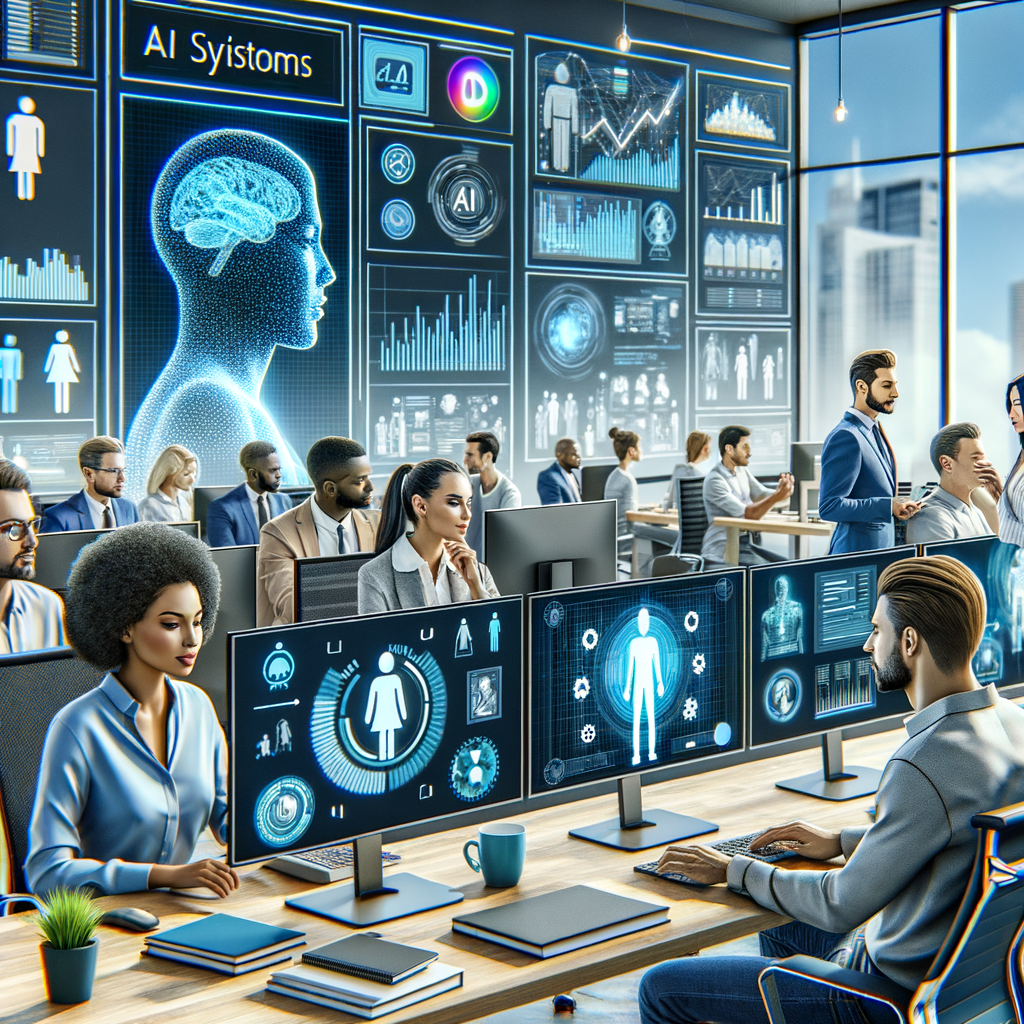
AI is changing how we work. AI systems for workplace optimization help us do our jobs better, not replace us. This shift has some folks excited, while others are concerned.
This article explores how AI systems for workplace optimization are making a difference now. We’ll also discuss challenges and what the future may hold. This exploration focuses on helping small to mid-sized business owners use AI to create happier, more efficient workplaces with improved employee experience.
By implementing AI in the workplace, businesses can streamline operations, reduce costs, and enhance productivity. Additionally, AI tools can facilitate better communication and collaboration among team members, fostering a more engaged workforce. As organizations navigate the evolving landscape of technology, it will be crucial for them to stay informed about the latest advancements in AI to maximize their benefits.
How AI Is Already Optimizing Workplaces
AI is impacting different workplace functions. It boosts productivity, strengthens team dynamics, and provides better customer service. AI systems have broad applications throughout the entire organization.
Streamlining HR Processes
AI sorts through tons of information quickly and without human bias (assuming training data isn’t biased, a key area to address). This makes AI useful for talent acquisition, filtering job applicants to identify promising candidates based on a wide range of data points.
AI tools for natural language processing can even analyze resumes and cover letters for sentiment analysis and other important factors. Think 79% of HR departments use automation (according to SHRM).
Predictive Workforce Planning
AI doesn’t just react; it predicts. Using data analytics and predictive analytics, companies can foresee staffing levels, potential skill gaps, and market shifts. This allows proactive measures and adjustments to challenges.
By leveraging AI in marketing strategies, businesses can tailor their campaigns to meet customer demands more effectively. This technology enables organizations to segment their audiences with precision, ensuring that the right message reaches the right people at the right time. Ultimately, these insights not only enhance customer engagement but also drive improved business outcomes.
Moreover, integrating AI into everyday operations streamlines processes and reduces costs, providing small and medium-sized enterprises (SMEs) with a competitive edge. By boosting your SME with AI, you can enhance decision-making capabilities through data-driven insights, allowing for more efficient resource allocation. This transformation not only establishes a more agile business model but also fosters an innovative culture that attracts new customers and retains existing ones.
Smarter scheduling tools match people to tasks at the right times, impacting employee productivity, leading to increased efficiency and worker satisfaction. These AI-powered tools greatly help with workforce planning and scheduling while maximizing productivity gains. They also enable companies to address future skills gaps, creating more opportunities for online training to boost employee morale.
Personalized Learning and Development
AI-driven platforms personalize learning experiences based on skill gaps and provide the most relevant training material. They analyze employee performance to identify areas for improvement and suggest relevant employee training opportunities.
These platforms act like personal tutors and contribute to improved employee engagement. They deliver a more effective and targeted approach to learning and development, supporting continuous skill development and adapting to the evolving labor market. These ai-powered scheduling tools can drastically increase employee productivity.
AI Systems for Workplace Optimization: Addressing Challenges
AI isn’t perfect. There are issues to address to truly experience the benefits of AI.
Data Bias
AI systems need reliable, unbiased data. Bad data creates bad outcomes, like discriminatory hiring practices. Ensuring fair and impartial datasets is an ongoing challenge. Data integrity is vital for reliable AI-driven insights.
Addressing human bias in datasets is crucial to achieve fair and objective results from AI technologies. These tools provide data-driven recommendations and remove much of human bias. Careful attention to this aspect will impact employee experience in many ways. How well companies address human bias issues will impact employee productivity for the better.
Privacy and Security
AI needs lots of data, sometimes involving private information. Keeping this data safe requires robust security measures.
Companies must be vigilant in protecting sensitive data while adhering to all relevant privacy and security protocols (avoiding privacy violations). This responsible approach to data management fosters trust and ensures ethical AI adoption.
The Human Element
AI helps human workers, not replaces them. Effective change management is crucial when introducing AI systems for workplace optimization into existing workflows.
Open communication and collaboration tools are essential for addressing employee concerns and gaining buy-in for AI adoption. AI augments human capabilities, not replaces them (improving employee experiences).
Organizations must prioritize these tools to ensure that all employees feel empowered to share their thoughts and suggest improvements. By implementing the best AI solutions for collaboration, companies can create a more cohesive work environment that fosters innovation and trust. Ultimately, this leads to better overall performance and a smoother transition into an AI-enhanced workplace.
Finding the balance between automation and human intuition supports staff, and helps answer questions from employees as AI continues to be incorporated into management practices.
The Future of AI-Powered Work
AI is rapidly evolving. The coming years will bring significant changes to the way we work.
Here are some predictions for the future:
- Hyper-Personalization: AI will learn your working styles, providing tailored experiences. This can be seen across digital transformation through AI implementation to create truly virtual assistant experiences.
- Proactive Well-being: AI will focus on employee well-being (as argued by OpenStax), offering insights to reduce burnout and foster team cohesion. AI tools are starting to take sentiment analysis very seriously by reviewing posts across many social media sites to proactively suggest improvements.
- Rise of the Chief AI Officer: A new C-suite position will guide AI strategy, bridging the gap between tech and business operations. Companies are starting to embrace AI systems for their benefits, especially for support process, where they offer a strong positive impact.
FAQs about AI systems for workplace optimization
How can AI be used in the workplace?
AI can automate tasks, analyze data for decision-making, personalize training, and enhance customer service. AI tools for space utilization can drastically improve real estate costs for office space for many types of organizations. Companies looking to reduce costs without reducing support staff will benefit the most from such tools.
How is AI used in workforce management?
AI optimizes schedules, predicts staffing needs, manages employee performance, and streamlines HR processes.
By harnessing data analytics, businesses can make informed decisions about workforce allocation and training programs. Furthermore, with the integration of ai in employee productivity measurement, organizations can gain deeper insights into individual and team performance, allowing them to tailor their strategies for improved outcomes. This powerful combination of technology and human expertise fosters a more engaged and effective workforce.
By leveraging data analytics, AI can identify trends and patterns that human managers may overlook, enabling more informed decision-making. Additionally, the benefits of AI in workplaces extend to enhancing employee engagement through personalized development plans and real-time feedback mechanisms. This not only boosts productivity but also fosters a more motivated and satisfied workforce.
How can AI be used to increase efficiency in the workplace?
AI automates repetitive tasks (improving efficiency through smarter scheduling), analyzes workflows, and optimizes resource allocation.
What is AI based optimization?
AI-based optimization uses algorithms to improve processes, allocate resources, and make better decisions. AI-based optimization assists in everything from workforce management to resource allocation.
Conclusion
AI systems for workplace optimization offer powerful ways to improve productivity and worker well-being. While there are challenges like data bias and ethical considerations to address, AI’s potential is immense.
Those who adopt and use these AI tools effectively are likely to thrive. As more companies embrace the transformative potential of AI, the benefits for the workplace and business success are very likely to become significant.
The integration of AI tools not only enhances productivity but also fosters innovation, creating new opportunities for employees to upskill and adapt to changing job requirements. As organizations harness AI’s impact on modern jobs, they will find that leveraging these technologies can lead to improved decision-making and a more agile workforce. Ultimately, those who remain open to collaboration with AI will likely set themselves apart in an increasingly competitive landscape.
To fully capitalize on the advantages that AI offers, investing in training and education, such as ai certification for business leaders, becomes crucial. This ensures that leaders are equipped with the knowledge to effectively integrate AI into their strategies and inspire their teams. As a result, organizations can foster a culture of continuous learning that not only improves proficiency but also instills confidence in navigating the AI-driven future.