

Discover AI Agent Benefits for Business Productivity: Unlocking Enterprise Efficiency with Trusted AI Solutions
The integration of AI agents into business processes represents a significant advancement in modern productivity strategies. These intelligent systems automate repetitive tasks, streamline workflows, and enhance decision-making capabilities, fundamentally transforming how organizations operate. As companies face increasing demands for efficiency, leveraging AI agents can provide a pathway to significant productivity improvements while ensuring governance and compliance. This article will explore the various benefits of AI agents, ranging from enhanced workflow automation to operational efficiency, and outline how leveraging trusted AI solutions can lead businesses toward increased productivity and competitive advantage. This is why understanding “AI Agent Benefits” is paramount for modern enterprises.
In the following sections, we will examine key aspects such as how AI agents boost productivity, their roles in business processes, metrics demonstrating ROI, and the importance of governance in AI deployment. We’ll also discuss the best practices for selecting AI solutions that align with enterprise needs. Each section includes practical considerations to help decision-makers evaluate how AI agents fit into operational models and the steps needed to realize measurable value.
Key Takeaways
- AI agents automate routine tasks, significantly enhancing business productivity and allowing focus on strategic activities.
- Intelligent virtual agents optimize processes by reducing costs, improving customer support, and adapting through learning.
- AI-driven process optimization accelerates efficiency by simplifying workflows and enhancing decision-making with data analysis.
- Enterprise AI productivity tools improve workflow efficiency, reduce operational costs, and enable faster informed decisions.
- AI governance frameworks ensure ethical, compliant, and transparent AI deployment, mitigating risks and fostering stakeholder trust.
- The AI Agent Blueprint provides structured methodologies for rapid, risk-mitigated AI implementation and faster ROI.
- AI automation supports scalable enterprise productivity by augmenting decisions, optimizing processes, and facilitating growth.
- People-first AI approaches reduce team burnout by automating repetitive tasks and enhancing employee well-being and job satisfaction.
- Evaluating AI solutions through pilot programs, performance metrics, and user feedback ensures alignment with business goals.
How Do AI Agents Enhance Business Productivity and Workflow Automation?

AI agents enhance business productivity significantly through their ability to automate routine tasks, allowing human workers to focus on higher-value activities. By integrating into various workflows, these agents not only reduce the time and effort spent on mundane tasks but also optimize decision-making processes through data analysis and real-time insights. This integration not only leads to improved efficiency but also fosters a culture of continuous improvement within organizations. Companies are increasingly looking to implement “AI solutions for productivity”.
Additionally, AI agents facilitate personalized customer interactions by leveraging data to tailor responses and services to individual needs. The outcome is a more engaging customer experience that can lead to increased satisfaction and loyalty. For businesses looking to implement AI solutions, eMedia AI offers comprehensive AI agent solutions designed specifically to enhance productivity and governance, ensuring seamless integration into existing workflows. Practical implementation typically includes phased rollouts, stakeholder alignment sessions, and ongoing measurement to refine agent behavior and integration points.
What Roles Do Intelligent Virtual Agents Play in Optimizing Business Processes?
Intelligent virtual agents play several critical roles in optimizing business processes, primarily by automating routine tasks, serving as customer support representatives, and gathering data insights. By performing task automation, these agents help reduce operational costs while improving service delivery. Their ability to handle multiple inquiries simultaneously enhances customer satisfaction and operational efficiency.
Moreover, these agents continually learn and adapt from interactions, which allows them to reduce response times and improve service quality over time. As a result, businesses can operate more effectively, ensuring that “employees are free to engage” in strategic initiatives that spur growth. In practice, virtual agents often feed structured interaction data back into analytics systems, enabling iterative improvements and better alignment with business goals.
How Does AI-Driven Business Process Optimization Accelerate Operational Efficiency?
AI-driven business process optimization accelerates operational efficiency through various mechanisms, including simplifying complex processes, minimizing errors, and “enhancing decision-making”. By analyzing vast datasets, AI systems can identify inefficiencies and suggest improvements that lead to faster workflows.
These systems also employ machine learning algorithms to predict needs and automate decisions based on historical data. This proactive approach helps organizations adapt swiftly to changing market conditions, thereby improving overall productivity and maintaining a competitive edge. Ultimately, this leads to enhanced productivity while simultaneously elevating customer experiences through timely and effective service. Organizations typically pair these optimizations with clear KPIs to measure the direct impact on cycle time, error rates, and throughput.
What Are the Key Benefits of AI Productivity Tools for Enterprise Use?
AI productivity tools come with numerous benefits that are particularly advantageous for enterprise use. These include:
- Workflow Efficiency: AI tools streamline workloads, enabling faster completion of tasks and reduction of “bottlenecks”.
- Enhanced Decision-Making: Access to predictive analytics empowers organizations to make informed decisions rapidly.
- Operational Cost Reduction: Automating routine tasks reduces labor costs and increases operational throughput.
By leveraging these tools, businesses can enhance productivity while ensuring that resources are allocated effectively for maximum impact. Enterprises often integrate productivity tools with existing collaboration platforms and process orchestration layers to preserve context and reduce disruption.
How Do AI Agents Reduce Operational Burnout and Support Teams?
AI agents significantly reduce operational burnout by automating repetitive and mundane tasks. This automation liberates employees from the drudgery of low-value work, allowing them to focus on “strategic initiatives” that require creative problem-solving and innovation. Furthermore, AI agents provide support through data-driven insights, which enable teams to make informed decisions quickly.
As teams experience less fatigue from repetitive tasks, employee well-being improves, leading to higher morale and productivity levels. Businesses that integrate AI agents effectively often report improvements in employee satisfaction and engagement, driving better performance across the organization. Practical steps to reap these benefits include clear role redesign, training to work alongside AI, and feedback loops so employees influence agent behavior.
Which Metrics Demonstrate ROI from AI Automation in Business Productivity?
Measuring ROI from AI automation involves various metrics that demonstrate productivity improvements and cost reductions. Some of the key metrics to consider include:
- Productivity Improvements: Tracking the reduction in time taken to complete tasks pre- and post-AI integration.
- Cost Reductions: Analyzing savings achieved from reduced labor costs associated with automated functions.
- Enhanced Response Times: Measuring improvements in service delivery times and customer satisfaction scores.
These metrics provide valuable insights into the efficacy of AI solutions, making it easier for businesses to assess their value proposition. Additional useful measures include task error rates, adoption rates among staff, and the time to resolve exceptions that still require human attention.
How Does Enterprise-Grade AI Governance Mitigate Risks in AI Deployment?
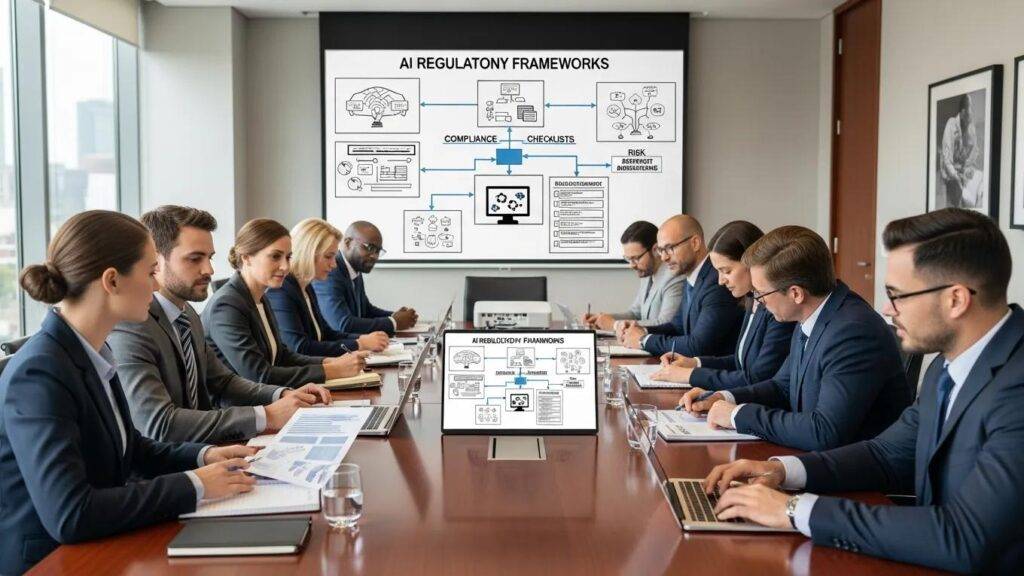
Implementing “enterprise-grade AI governance” is crucial for mitigating risks associated with AI deployment. This governance establishes ethical frameworks to ensure AI applications align with organizational policies and regulatory requirements. By prioritizing “compliance”, organizations can reduce the potential for legal challenges and reputational damage.
Additionally, strong governance protocols enhance transparency around AI systems’ operations, ensuring that stakeholders are informed about their performance and decision-making processes. This, in turn, helps foster trust among users and stakeholders while supporting the successful adoption of AI technologies. Common governance elements include model documentation, change-control processes, and stakeholder communication plans that maintain oversight as systems evolve.
What Frameworks Ensure Secure and Compliant AI Agent Implementation?
Establishing secure and compliant AI agent implementations requires adherence to specific frameworks designed to protect data and ensure ethical use. Key frameworks include:
- NIST AI RMF: Provides guidelines for managing risks associated with AI systems.
- EU AI Act: Establishes regulatory standards for AI deployment within the European Union, emphasizing ethical considerations.
- Data Protection Laws: Require organizations to maintain rigorous protocols for handling personal data.
These frameworks provide organizations with a structured approach to AI implementation that “minimizes risks” while promoting security and compliance. When mapped to internal processes, these frameworks help companies create checklists and controls that accelerate audits and vendor assessments.
How Does AI Governance Facilitate Faster and Safer AI Adoption?
AI governance plays a pivotal role in facilitating faster and safer AI adoption by providing clear guidelines for implementation and usage. It enhances trust among users by ensuring that AI systems are deployed ethically and transparently. Furthermore, by addressing potential legal risks and compliance challenges upfront, organizations can navigate the complexities of AI adoption more effectively.
The result is streamlined project delivery, as teams can focus on leveraging AI tools to enhance productivity without the fear of encountering significant “governance issues”. Clear governance also reduces cycles lost to rework and helps prioritize high-impact use cases that meet both business and regulatory requirements.
What Is the AI Agent Blueprint and How Does It Enable Fast ROI?
The “AI Agent Blueprint” serves as a strategic framework for implementing AI solutions within enterprises. This methodology provides a clear path for organizations to follow, encompassing essential stages such as:
- Purpose Definition: Establishing the goals of AI adoption.
- Data Collection and Preparation: Ensuring relevant data is gathered and ready for analysis.
- Implementation Strategies: Outlining the steps for deploying AI tools effectively.
By following this blueprint, organizations can achieve “faster ROI” while minimizing risks associated with AI deployment. The blueprint typically recommends early validation with small pilots, stakeholder alignment, and measurable milestones to demonstrate value before scaling broadly.
What Structured Methodologies Does the Blueprint Provide for AI Deployment?
The structured methodologies provided by the AI Agent Blueprint are designed to guide organizations through the complexities of AI deployment. Key methodologies include:
- Opportunity Workshops: Identifying business areas where AI can deliver maximum “value”.
- Feasibility Studies: Assessing the practicality of proposed AI solutions.
- Pilot Projects: Implementing small-scale AI projects to validate assumptions and test performance before broader implementation.
These methodologies enable businesses to adopt AI strategically, ensuring that deployments are aligned with organizational goals. They also support incremental learning, which reduces risk and makes it easier to refine agent behavior and integration patterns as real-world feedback is gathered.
How Do Proven Case Studies Validate Blueprint Effectiveness?
Proven case studies play a crucial role in validating the “effectiveness of the AI Agent Blueprint”. These studies offer real-world examples that demonstrate:
- Reduction in Unplanned Downtime: Organizations reporting lower downtime due to proactive AI-enabled maintenance solutions.
- Improvement in Workflow Efficiency: Documented increases in productivity and operational output.
- Validation of Fast ROI: Quantitative data showcasing a clear return on investment from early adoption of AI strategies.
Studying these case examples allows organizations to learn from peers’ successes, fostering confidence in their own AI initiatives. Case studies also help teams set realistic expectations for timelines, resource needs, and potential obstacles during rollout.
How Can AI Agents Specifically Improve Marketing and Content Production Productivity?
AI agents are particularly beneficial in enhancing marketing and content production productivity by automating various tasks. These agents facilitate:
- Automation of Marketing Tasks: Streamlining processes such as email marketing, social media management, and “customer segmentation”.
- Faster Content Production: Utilizing AI tools to generate content ideas, draft articles, and optimize SEO strategies.
- Scalability: Enabling marketing teams to manage larger campaigns without a proportional increase in resources.
By harnessing AI capabilities, organizations can expand their marketing efforts while maintaining high-quality outputs. In practice, combining AI-driven drafts with human review produces consistent tone and brand alignment while speeding up iteration cycles for campaigns.
What Are People-First AI Approaches to Reduce Team Burnout?
Implementing “people-first AI approaches” focuses on enhancing employee well-being while leveraging technology to support daily operations. Key strategies include:
- Tailoring Support for Employee Wellness: Developing AI-driven wellness programs that adapt to individual team member needs to improve work-life balance.
- Reducing Repetitive Task Load: Automating low-value tasks to minimize employee frustration and fatigue.
- Enhancing Job Satisfaction: Creating an engaging work environment by allowing employees to focus on innovative problem-solving.
These approaches demonstrate that AI can serve not only organizational goals but also contribute positively to the “workforce’s morale” and mental health. Successful people-first initiatives include clear communication about how AI will change roles and providing training so employees can move into more rewarding responsibilities.
How Do AI Agent Workflows Streamline Marketing Operations?
AI agent workflows bring order and structure to marketing operations by automating processes and facilitating collaboration. The benefits of these workflows include:
- Efficiency in Campaign Launches: Automating launch timelines and notifications to ensure marketing teams stay on track.
- Automation in Data Management: Streamlining data collection and analysis tasks to provide real-time “insights for marketing strategies”.
- Increased Personalization: Using customer data to create targeted marketing messages that resonate with specific audience segments.
By utilizing AI workflows, organizations can create a more agile marketing operation that rapidly responds to market demands. Teams often embed review gates and quality checks in those workflows so personalization scales without compromising compliance or brand voice.
What Are Best Practices for Selecting and Qualifying High-Ticket AI Solutions?
When selecting high-ticket AI solutions, organizations should adhere to specific best practices that “ensure alignment with their strategic goals”. These include:
- Assessing Alignment with Business Goals: Ensuring chosen solutions directly support organizational objectives and desired outcomes.
- Identifying Specific Use Cases: Evaluating potential “applications of AI technology” before implementation to target needs effectively.
- Ensuring Scalability: Selecting solutions that can grow with the business, accommodating future demands and expansions.
By following these practices, organizations can minimize risks and enhance the likelihood of successful AI integration. Procurement teams benefit from checklists that include integration complexity, total cost of ownership, and vendor support models when evaluating high-ticket options.
How to Evaluate AI Agents for Enterprise Productivity Gains?
Evaluating AI agents for their potential productivity gains involves implementing “structured evaluation methods”. Key steps include:
- Pilot Program Implementation: Testing AI solutions in a controlled environment to gauge their “effectiveness”.
- Performance Metrics Establishment: Defining clear metrics to assess improvements in productivity post-implementation.
- User Feedback Collection: Gathering insights from employees on usability and effectiveness to inform future deployments.
These steps provide a robust framework for organizations to make informed decisions about AI tool acquisitions. Pilots should include success criteria and a plan to scale when results meet predetermined thresholds.
Why Is eMedia AI’s Blueprint the Logical Conversion Step for Businesses?
eMedia AI’s Blueprint represents a “logical conversion step” for businesses seeking to integrate AI solutions effectively. The blueprint emphasizes:
- Rapid ROI Potential: Highlighting how strategic implementation can deliver significant returns quickly.
- Structured Methodology Outlined: Providing a clear path for AI deployment that reduces uncertainty.
- Danger Mitigation in AI Deployment: Addressing common risks associated with AI technology to enhance safe adoption.
Organizations adopting this blueprint can navigate the complexities of AI integration confidently, ensuring success in their “productivity-enhancing initiatives”. The blueprint also encourages documenting lessons learned during pilots to shorten time-to-value in subsequent projects.
How Does AI Automation Contribute to Business Growth and Increased Order Values?
AI automation significantly contributes to business growth by streamlining processes and increasing order values. This is achieved through:
- Efficiency Gains Through AI: Reducing operational bottlenecks that impede customer order fulfillment.
- Operational Cost Reductions: Allowing businesses to operate with lower overheads, enabling competitive pricing strategies.
- Enhanced Customer Experiences: Providing personalized services that encourage repeat business and higher transaction values.
By automating workflows, organizations can position themselves for sustainable growth in a competitive marketplace. Firms often combine automation with targeted upsell strategies that guide customers toward higher-value offerings without increasing friction.
What Data Supports AI Agents’ Impact on Average Order Value Lift?
Several data points indicate the positive impact AI agents can have on average order value. Key metrics include:
- Increased Productivity Measures: Reports of productivity boosts leading to enhanced sales output.
- Cost Reduction Statistics: Evidence of decreased operational costs allowing for more competitive pricing.
- Return on Investment Figures: Documented instances of improved profitability relating directly to AI implementation.
These data points illustrate the financial benefits that can be realized from effective AI utilization. Organizations often combine quantitative tracking with qualitative feedback from sales and customer success teams to understand how AI-driven interactions influence buying behavior.
How Does Automation Enable Scalable Enterprise Productivity?
Automation plays a critical role in enabling “scalable enterprise productivity”. By automating routine roles, organizations can:
- Augment Decision-Making: Providing analytical support that enhances the speed and quality of business decisions.
- Optimize Overall Processes: Streamlining workflows, which allows for faster adaptation to market changes.
- Facilitate Growth: Enabling businesses to expand operations without a corresponding increase in workforce or resources.
This scalability empowers organizations to take on new opportunities without being constrained by existing processes or capabilities. Successful scaling typically involves monitoring performance, ensuring data quality, and maintaining clear lines of ownership for automated tasks.
What Questions Do Businesses Commonly Ask About AI Agent Deployment Risks?
When considering AI agent deployment, businesses often raise common concerns regarding potential risks. Key questions include:
- What are the security risks associated with AI agent integrations?
- What compliance challenges should enterprises address in AI adoption?
- What ethical considerations must be acknowledged during deployment?
Addressing these questions can mitigate concerns and foster confidence in AI implementations. Early engagement with compliance, security, and ethics stakeholders ensures the program addresses expectations and avoids late-stage blockers.
How Are Security Risks Managed in AI Agent Integrations?
Managing security risks in AI agent integrations is critical to maintaining data integrity and user trust. Organizations can adopt the following strategies:
- Strong Data Governance Protocols: Establishing clear policies on data management and security.
- Regular Security Audits: Conducting assessments to identify vulnerabilities and “mitigate risks”.
- Utilization of Encryption Methods: Protecting sensitive data through advanced encryption technologies.
Implementing these measures helps safeguard against potential security breaches and reinforces stakeholder confidence in AI systems. Cross-functional exercises that simulate breach scenarios help teams validate controls and improve readiness.
What Compliance Challenges Should Enterprises Address in AI Adoption?
Enterprises must navigate several “compliance challenges” when adopting AI technologies. Key considerations include:
- Data Privacy and Protection Regulations: Ensuring compliance with existing laws governing data usage and storage.
- Security Concerns in Data Handling: Establishing protocols that protect data during processing and storage to prevent breaches.
- Ethical Considerations in AI Usage: Aligning AI operations with ethical standards to promote fair treatment and accountability.
Addressing these challenges proactively can help businesses build trust with customers and stakeholders while ensuring regulatory compliance. Establishing audit-ready documentation and routine reviews reduces friction during regulatory inquiries or vendor assessments.
This highlights how AI, particularly in the context of Industry 4.0, presents both significant opportunities for business process optimization and critical challenges that require careful strategic planning.
AI in Industry 4.0: Challenges and Strategies for Business Process Optimization
The rise of Industry 4.0 has introduced significant transformations in business operations, with Artificial Intelligence (AI) playing a central role in automating processes, enhancing decision-making, and improving efficiency. However, despite its potential, many organizations face critical challenges in implementing AI, particularly in terms of technological infrastructure readiness, workforce capabilities, and ethical considerations. This research aims to identify the challenges and propose effective strategies for AI implementation in business processes, particularly within the context of Industry 4.0. AI challenges and strategies for business process optimization in industry 4.0: systematic literature review, T Sumarlin, 2024
Frequently Asked Questions
What are the main challenges businesses face when implementing AI agents?
Implementing AI agents comes with several challenges that businesses must navigate. These include technological infrastructure readiness, as many organizations may not have the necessary systems in place. There’s also a significant need for workforce training, as employees must adapt to using new AI tools. Moreover, ethical considerations around bias and algorithm transparency are critical. Addressing these challenges requires strategic planning and investment in both technology and training to ensure successful AI integration. Companies that plan for change management and continuous learning tend to experience smoother adoption.
How do businesses quantify the success of AI agent deployments?
Quantifying the success of AI agent deployments involves a data-driven approach using specific metrics. Commonly evaluated metrics include productivity improvements, such as time saved on tasks, and operational cost reductions attributed to automation. Customer satisfaction and engagement scores are also important indicators. Businesses often analyze these metrics over time to establish clear ROI, enabling continuous improvement and adjustments in AI strategy as needed. Triangulating quantitative metrics with qualitative user feedback gives a fuller picture of impact.
In what ways can AI agents enhance customer experience?
AI agents can significantly enhance customer experience by providing personalized interactions and quick responses. They can analyze customer data to tailor services based on individual preferences and past behavior. Additionally, AI can handle inquiries at any time, offering support 24/7 and ensuring customers receive assistance when needed. This level of personalization and accessibility leads to increased satisfaction and loyalty, improving the overall customer experience. Coordinating AI agents with human support for complex issues ensures high-quality service across channels.
What industries benefit the most from AI agent implementation?
While many industries can benefit from AI agents, sectors like retail, healthcare, finance, and customer service experience significant advantages. In retail, for instance, AI can optimize inventory management and personalize marketing efforts. In healthcare, AI agents assist with patient engagement and data management. Finance relies on AI for fraud detection and customer service automation. Each of these industries leverages AI to streamline operations, enhance decision-making, and improve client interaction. The specific benefits vary by use case, but the underlying value is consistent: better efficiency tied to improved outcomes.
What ethical considerations should be addressed in AI deployment?
Ethical considerations in AI deployment include ensuring fairness to prevent bias in AI algorithms, promoting transparency in how AI systems make decisions, and safeguarding user data privacy. Companies should develop guidelines for responsible AI use to foster accountability. Engaging stakeholders in discussions about AI’s implications helps build trust and aligns IT strategies with social values, crucial for ethical AI deployment. Regular reviews and third-party audits can help surface and address potential ethical concerns before they escalate.
How can organizations ensure their AI solutions remain scalable?
To ensure scalability, organizations should select AI solutions that are designed with flexibility in mind. They should integrate systems that can grow with their needs, utilizing cloud-based architectures that allow for easy updates and adjustments. Additionally, conducting regular evaluations of performance and user feedback can inform necessary adjustments that support scalability, while effectively aligning with the organization’s evolving goals. Clear API interfaces, modular components, and well-documented data flows make it easier to scale without disrupting core operations.
What role does employee training play in the success of AI implementations?
Employee training is vital for the success of AI implementations, as it ensures that staff are equipped to use new technologies effectively. Training programs should focus on improving technical skills as well as fostering a cultural shift towards integrating AI into everyday processes. Well-trained employees are more likely to embrace AI tools, leading to higher productivity, improved job satisfaction, and successful adoption of new workflows. Ongoing coaching and accessible learning resources help maintain momentum as tools and processes evolve.