

Driving Profitable AI Integration Through Responsible Adoption
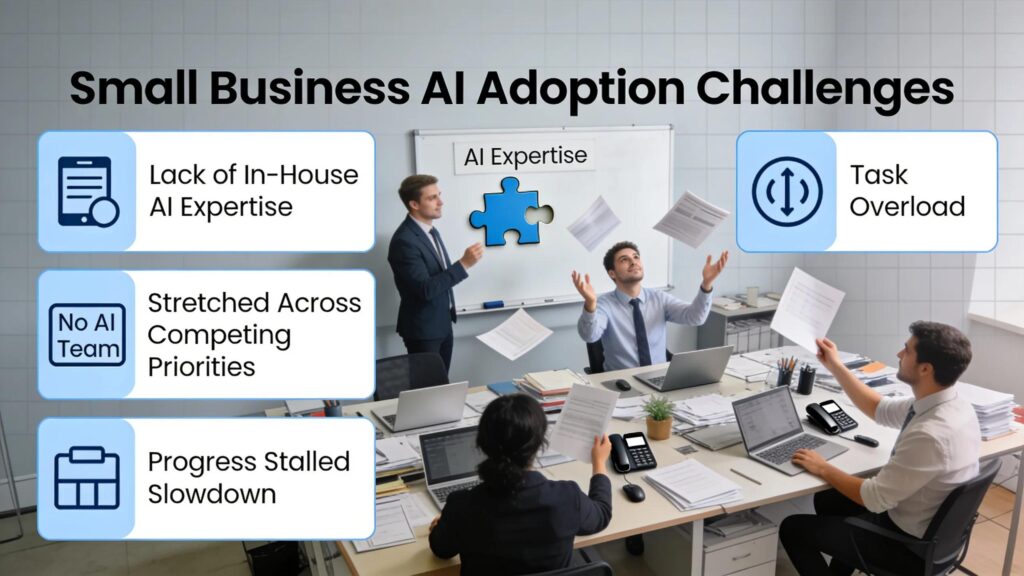
Artificial intelligence integration is moving from experimental pilots to strategic operational capability, reshaping workflows, decisions, and customer experiences across industries. This article explains emerging trends in AI integration and shows how responsible, human-centric adoption reduces friction and drives measurable ROI for small and mid-sized businesses. Readers will learn about agentic and multimodal AI, practical governance patterns for SMBs, people-first implementation frameworks, and concrete measurement practices that sustain value over time. The guide also presents a rapid, productized roadmap—AI Opportunity Blueprint™—and describes fractional leadership options that help constrained teams adopt AI ethically and profitably. We map technical trends to SMB-ready tactics, governance templates, and KPI examples so teams can identify high-ROI use cases, mitigate bias and drift, and scale AI with employees empowered rather than displaced.
What Are the Key Emerging Trends in AI Integration for Businesses?
Emerging trends in AI integration combine capabilities that extend automation into decision augmentation, richer input types, and invisible background services that support real-time operations. These trends enable organizations to move from rule-based automation to agentic AI systems that act across workflows, while multimodal models fuse text, image, audio, and structured data to deliver deeper insights. At the same time, responsible AI practices, monitoring dashboards, and governance templates are becoming part of core deployments to manage risk and align with business values. The following list captures the top trends and their immediate business impacts for SMBs.
AI integration shows several distinct, actionable trends for businesses:
- Agentic AI systems: autonomous agents that perform multi-step tasks and coordinate services to augment decision-making.
- Multimodal AI models: combine text, image, audio inputs to improve context-aware recommendations and analytics.
- Generative AI tools: content creation and summarization utilities that speed marketing, documentation, and knowledge work.
- Invisible AI/edge automation: background inference and low-latency models embedded in products or processes.
- Practical AI governance: policies, monitoring dashboards, and ethical checklists that manage bias, safety, and privacy.
These trends highlight a shift from isolated point solutions to integrated, governance-aware systems; next we examine how agentic AI and automation reshape workflows.
How Are Agentic AI and Automation Transforming Business Workflows?
Agentic AI refers to systems that can perform multi-step, goal-directed actions across tools and datasets, distinct from single-task automation that executes repeatable operations. In practice, agentic systems orchestrate data retrieval, decision rules, and action execution—reducing handoffs, accelerating response times, and enabling staff to focus on higher-value work. SMBs can deploy agentic assistants for tasks like triaging customer inquiries, coordinating order fulfillment, or managing routine compliance checks, yielding time savings and fewer escalation loops. Governance matters: agentic deployments require approval gates, human-in-the-loop controls, and monitoring to prevent unintended outcomes and to ensure alignment with business rules. Understanding these governance needs prepares organizations to adopt agentic capabilities while preserving safety and accountability.
What Role Does Multimodal AI Play in Enhancing Business Decision-Making?
Multimodal AI integrates multiple data types—text, images, audio, and structured records—so models reason with richer context and produce more accurate, actionable outputs for business decisions. For example, a multimodal analytics pipeline can combine customer support transcripts, product images, and purchase history to identify product defects and prioritize returns, improving resolution speed and reducing churn. Implementing multimodal solutions at SMB scale requires curated datasets, lightweight ingestion pipelines, and attention to privacy and storage. When combined with retrieval-augmented generation (RAG) and domain-specific embeddings, multimodal systems can power explainable recommendations and enhance human oversight in decisions. These capabilities increase signal quality for managers and reduce guesswork, making decisions faster and better informed.
| Trend | Characteristic | Business Impact |
|---|---|---|
| Agentic AI | Multi-step autonomous actions | Reduces manual handoffs, speeds workflows |
| Multimodal AI | Fusion of text, image, audio | Improves context-aware decisions and insights |
| Generative AI | Content synthesis and summarization | Speeds content workflows, reduces headcount pressure |
| Invisible/Edge AI | Local inference, low latency | Enhances product responsiveness and privacy |
The comparison above shows how different trends map to practical outcomes; the next sections detail governance and people-first adoption required to capture these benefits.
How Can SMBs Implement Responsible AI Adoption and Ethical AI Governance?
Responsible AI adoption for SMBs combines clear principles with lightweight governance structures that fit limited resources yet maintain oversight. Ethical principles—fairness, transparency, privacy, safety, and accountability—act as high-level constraints, while practical policies and approval gates operationalize them in day-to-day projects. SMBs can start with an AI readiness audit to prioritize use-cases, assign a governance champion, and implement simple monitoring dashboards that track performance and fairness metrics. The goal is to enable rapid experimentation while protecting customers and employees, and to embed review cycles so learning informs future rollouts.
Practical steps help translate principles into action:
- Adopt core ethics principles: document fairness, transparency, privacy, safety, and accountability for all AI projects.
- Appoint roles: assign a governance champion and define sign-off authorities for pilots and deployments.
- Implement lightweight checks: bias detection routines, logging, and post-release audits for early detection.
- Set review cadence: schedule quarterly governance reviews and incident response drills.
These steps provide SMBs a pragmatic governance start; next we define the core principles in accessible terms and examples.
What Are the Core Principles of Ethical AI for Small and Mid-Sized Businesses?
Core ethical AI principles—fairness, transparency, privacy, safety, and accountability—translate easily to SMB contexts when accompanied by simple checks and ownership. Fairness means evaluating model outputs for disparate impact across customer groups and applying bias detection routines where needed. Transparency involves documenting data sources, model purpose, and limitations so stakeholders understand risks and expected behaviors. Privacy requires minimizing sensitive data ingestion and using anonymization or synthetic data when possible. Accountability assigns human owners who approve models before deployment and maintain incident logs. These practical definitions make ethics operational rather than aspirational for resource-constrained teams.
How Can SMBs Establish Practical AI Governance Frameworks?
SMBs can establish a governance framework in a few focused steps that prioritize speed and safety: define roles, set approval gates, adopt monitoring practices, and document decisions. Start by naming a governance champion (or consider fractional leadership) responsible for policy enforcement and vendor oversight. Build simple approval gates: idea, pilot, scale—each with required artifacts (data inventory, risk checklist, performance thresholds). Implement minimal tooling—monitoring dashboards and automated alerts for drift and fairness—and schedule recurring audits. These lightweight structures enable compliant experimentation and provide a clear path to scale while maintaining people-first safeguards.
| Governance Phase | Core Activity | Outcome |
|---|---|---|
| Idea | Use-case vetting and risk checklist | Prioritized candidate list |
| Pilot | Data validation and human review | Safe, monitored prototype |
| Scale | Integration, monitoring, documentation | Productionized, auditable system |
This template gives SMBs a realistic governance path that balances speed and oversight; next we discuss human-centric AI and why it matters.
What Is Human-Centric AI and Why Is It Essential for Business Success?
Human-centric AI focuses on augmenting people’s capabilities, protecting employee well-being, and designing systems that respect human judgment rather than replacing it. The mechanism combines user-centered design, co-creation with stakeholders, and training that increases AI literacy so teams trust and correctly use outputs. Benefits include higher adoption rates, improved productivity, and better retention because employees feel empowered rather than threatened by automation. Implementing human-centric AI requires deliberate co-design sessions, role-based workflows that keep humans in control of critical decisions, and continuous feedback loops to refine models and interfaces.
Human-centric approaches produce measurable workplace improvements:
- Increased productivity: automation of repetitive tasks frees knowledge workers for complex problem-solving.
- Better morale: co-design and transparent systems reduce fear and increase ownership.
- Safer decisions: human oversight mitigates catastrophic errors and preserves accountability.
These benefits explain why embedding people-first principles early accelerates adoption; the following subsections show specific employee outcomes and frameworks to operationalize this mindset.
How Does Human-Centric AI Improve Employee Productivity and Satisfaction?
Human-centric AI augments daily work by automating low-value tasks and surfacing contextual insights that support decision-making, which increases productivity and reduces cognitive load. For example, AI-assisted summarization of customer interactions can save hours weekly for support teams, allowing agents to resolve complex issues more thoroughly. Co-designing tools with frontline staff ensures interfaces match workflows, improving satisfaction and reducing resistance. Training and AI literacy are essential so employees understand model limits and can interpret outputs, which sustains trust and mitigates misuse. These mechanisms collectively increase throughput, quality of work, and employee engagement.
The successful integration of human-centric AI hinges on understanding and addressing the human element, a domain where Human Resource Management plays a pivotal role.
HRM’s Critical Role in Human-Centric AI Adoption for Digital Transformation
We argue that while engineers and data scientists excel in handling AI and data-related tasks, they often lack insights into the nuanced human aspects critical for organizational AI success. Thus, Human Resource Management (HRM) emerges as a crucial facilitator, ensuring AI implementation and adoption are aligned with human values and organizational goals. This paper explores the critical role of HRM in harmonizing AI’s technological capabilities with human-centric needs within organizations while achieving business objectives. Our positioning paper delves into HRM’s multifaceted potential to contribute toward AI organizational success, including enabling digital transformation, humanizing AI usage decisions, providing strategic foresight regarding AI, and facilitating AI adoption by addressing concerns related to fears, ethics, and employee well-being. It reviews key considerations and best practices for operationalizing human-centric AI through culture, leadership, knowledge, policies, and tools. By focusing on what HRM can realistically achieve today, we emphasize its role in reshaping roles, advancing skill sets, and curating workplace dynamics to accommodate human-centric AI implementation. This repositioning involves an active HRM role in ensuring that the aspirations, rights, and needs of individuals are integral to the economic, social, and environmental policies within the organizat
The critical role of HRM in AI-driven digital transformation: a paradigm shift to enable firms to move from AI implementation to human-centric adoption, A Fenwick, 2024
What Frameworks Support Human-Centric AI Implementation in SMBs?
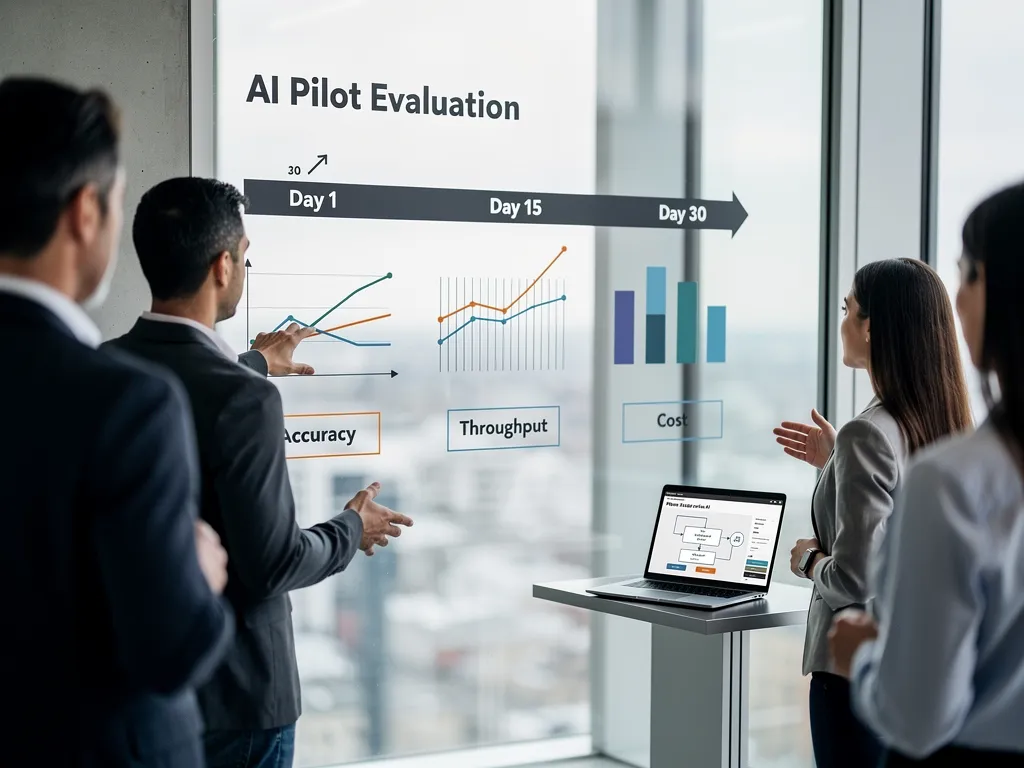
Practical frameworks for people-first AI in SMBs emphasize co-design, iterative pilots, and accessible training that scales with adoption. Begin with user journey mapping to identify pain points and co-create prototypes with representative employees. Run short pilots with clear success criteria, gather feedback, and refine the system before wider rollout. Pair pilots with targeted AI literacy workshops and role-specific playbooks that teach when to trust AI recommendations and how to escalate exceptions. Finally, establish feedback channels and metrics that capture both technical performance and user satisfaction to guide continuous improvement.
| Framework Step | Artifact | Purpose |
|---|---|---|
| Co-design | User journeys, prototypes | Align AI to real workflows |
| Pilot | KPI dashboard, feedback log | Validate adoption and ROI |
| Train | Workshops, role playbooks | Build literacy and trust |
| Iterate | Release notes, improvement backlog | Sustain relevance and performance |
This framework ensures AI deployments remain centered on people and deliver measurable value; next we present a rapid productized path to identify high-ROI use cases.
How Does the AI Opportunity Blueprint™ Facilitate Profitable AI Integration?
The AI Opportunity Blueprint™ is a structured, 10-day roadmap designed to identify people-safe, high-ROI AI use-cases and create an executable plan that aligns with existing workflows. The Blueprint combines discovery, prioritization, and integration planning into time-boxed phases that produce a prioritized ROI list, an integration checklist, and pilot specifications. Its speed and focus help SMBs move from idea to pilot-ready without long consultative engagements, while attention to people-first adoption reduces resistance and supports measurable outcomes within months. The Blueprint is presented as a practical starter for teams that need a fast, governed path to test and scale AI responsibly.
| Phase | Activity | Deliverable |
|---|---|---|
| Discover | Use-case identification workshops | Prioritized ROI list |
| Assess | Data & readiness audit | Data readiness report |
| Design | Pilot specifications & integration plan | Pilot plan & success metrics |
| Plan | Resource mapping & governance gates | Implementation checklist |
| Handoff | Pilot kickoff support | Pilot-ready deployment package |
This phase table clarifies expectations for a compact 10-day engagement and shows what clients receive at each stage; the structured outputs make it easier to launch credible pilots quickly. For SMBs seeking a practical catalyst, the Blueprint is a direct path to prioritized pilots and measurable results.
What Are the Steps in the AI Opportunity Blueprint™ for Identifying High-ROI Use Cases?
The Blueprint proceeds with short, sequential steps: discover promising use-cases through stakeholder workshops, assess data and technical readiness, design prioritized pilots with clear KPIs, and produce an integration plan that aligns with workflows and governance needs. Each step includes specific activities—stakeholder interviews, lightweight data inventories, pilot scoping sessions, and risk checklists—culminating in deliverables your team can act on immediately. The entire process is time-boxed to 10 days to maintain momentum and limit scope creep, producing a clear path toward measurable ROI. Prioritization emphasizes people-safe deployments and pilotability so results are achievable within tight resource constraints.
How Does the Blueprint Reduce AI Adoption Friction and Align with Existing Workflows?
The Blueprint reduces adoption friction by using co-design workshops, small pilot projects, and explicit change management steps to align AI outputs with current workflows and responsibilities. Techniques include mapping existing processes, identifying touchpoints for augmentation, running rapid pilots with human-in-the-loop controls, and creating targeted training artifacts. By involving frontline users in design and keeping pilots narrowly scoped, teams see early wins that build trust and create momentum for scaling. The people-first orientation minimizes resistance and ensures AI features slot into daily work rather than creating disruptive new processes.
eMediaAI offers the AI Opportunity Blueprint™ as a 10-day engagement to generate prioritized, people-safe AI pilots and integration plans; the offering is positioned to help SMBs act rapidly on these trends and is listed at $5,000. This productized approach aligns with the practical guidance above and provides a tangible next step for teams that want guided, rapid identification of high-ROI use-cases while preserving ethical safeguards.
What Are the Benefits of Fractional Chief AI Officer Services for SMBs?
Fractional Chief AI Officer (fCAIO) services provide strategic leadership, governance setup, and vendor oversight on a part-time basis, making expert guidance accessible and affordable for SMBs. A fractional CAIO bridges strategy and execution: they create roadmaps, define governance policies, oversee pilot selection, and coordinate integration with IT and business teams. For resource-constrained organizations, fractional leadership accelerates decision-making, reduces vendor selection risk, and maintains continuity as pilots scale. This model fits SMBs that need senior expertise without the cost of a full-time executive, enabling consistent oversight as AI initiatives mature.
Benefits of fractional CAIO services include:
- Faster strategy-to-execution alignment and prioritization of high-ROI projects.
- Governance and compliance oversight without hiring full-time leadership.
- Vendor and tooling selection expertise that reduces implementation risk.
- Coaching and capability building for internal teams to maintain momentum.
These benefits make fractional leadership an efficient way to scale AI responsibly; the following subsections describe typical responsibilities and why this leadership model matters for scaling.
How Does a Fractional CAIO Support AI Strategy and Governance?
A fractional CAIO typically defines the AI roadmap, establishes governance policies, oversees vendor engagements, and sets KPIs to measure progress and adherence to ethical standards. Engagements often include a mix of strategic planning, hands-on oversight for critical pilots, and creation of artifacts like risk checklists, data inventories, and monitoring dashboards. By providing periodic oversight and targeted interventions, a fractional CAIO plugs governance gaps quickly and helps ensure pilots meet business objectives and compliance requirements. This approach provides tactical leadership while enabling internal teams to learn and take on operational responsibilities over time.
Why Is Fractional CAIO Leadership Critical for Scaling AI in Small Businesses?
Scaling AI without strategic oversight often leads to tool sprawl, inconsistent governance, and strategy drift—risks that fractional CAIO leadership addresses by aligning projects with business KPIs and enforcing standards. Fractional leaders help prioritize investments, reduce duplication, and set repeatable processes for experimentation and deployment. With expert guidance, SMBs can avoid common pitfalls—uncontrolled model drift, unmanaged data silos, and unclear ownership—and secure faster time-to-value. The fractional model balances affordability with senior expertise, giving SMBs a practical route to sustainable AI scaling.
| fCAIO Responsibility | Typical Deliverable | Impact |
|---|---|---|
| Strategy & roadmap | Prioritized project plan | Clear focus and resource allocation |
| Governance setup | Policies & approval gates | Reduced risk and auditability |
| Vendor oversight | RFPs and evaluations | Better tool fit and cost control |
This table demonstrates how fractional leadership produces tangible governance and strategic outputs that support scaling; next we outline measurement and sustainability practices.
How Can Businesses Measure and Sustain AI Value for Long-Term Success?
Measuring and sustaining AI value combines fast wins with continuous monitoring and governance to convert pilots into durable operational improvements. Effective measurement maps specific KPIs to business objectives—reduced cost per task, improved conversion rates, faster resolution times—and sets realistic SMB targets and review cadences. Continuous monitoring addresses model drift, fairness degradation, and performance variance, while a feedback loop from users drives iterative improvements. Together, these practices convert experimental gains into sustainable value, ensuring AI investments continue to deliver measurable outcomes as conditions and data evolve.
Below are practical KPIs and targets SMBs can adopt to measure progress:
- Cost per task reduced: target 20–50% reduction within 90 days for automation pilots.
- Time-to-decision improvements: target 30–60% faster decisions from augmented workflows.
- Conversion or revenue lift: aim for measurable percentage lift tied to pilot goals.
- Model performance stability: maintain baseline metrics and monitor drift weekly.
These KPIs ground pilots in business results and create accountability for scaling successful projects.
What Are Proven Methods to Achieve Rapid ROI from AI Integration?
Rapid ROI typically comes from prioritizing high-impact, low-complexity use-cases, running focused pilots, and ensuring human oversight to secure adoption. Proven tactics include automating repetitive tasks, using generative AI to accelerate content workflows, applying RAG to improve knowledge worker efficiency, and deploying targeted models for customer triage. Each pilot should have clear success metrics, a short timeline (often under 90 days to initial value), and a plan for handoff to operations. Change management—training, documentation, and co-design—ensures that early gains persist when the solution is scaled.
How Can Continuous AI Monitoring Improve Performance and Adaptation?
Continuous monitoring combines performance dashboards, drift detection, fairness checks, and human-in-the-loop review to keep models reliable and aligned with business norms. Recommended cadence includes daily or weekly automated alerts for performance degradation, monthly fairness reviews, and quarterly governance audits. Lightweight tooling—open-source monitoring libraries or simple dashboards—can deliver early detection without heavy investment. Feedback channels from users feed corrective retraining and threshold adjustments, ensuring models adapt to shifting data and business priorities. This disciplined approach prevents value erosion and supports steady improvement over time.
| KPI | Description | Typical SMB Target |
|---|---|---|
| Cost per task reduced | Percent reduction in manual processing cost | 20–50% within 90 days |
| Time-to-decision | Reduction in decision latency | 30–60% faster |
| Conversion lift | Increase in conversion rate tied to AI | Measurable uplift within pilot |
| Model drift incidents | Number of drift events detected | Zero critical drift; corrective action within 7 days |
These KPI mappings give SMBs concrete targets to validate ROI and prioritize monitoring; for teams seeking assistance, short engagements can accelerate setup and measurement.
For SMBs ready to convert strategy into action, eMediaAI provides consulting services—including AI readiness audits, integration and deployment support, AI literacy workshops, and fractional Chief AI Officer services—that help teams implement these measurement and governance practices. The AI Opportunity Blueprint™ is offered as a 10-day, $5,000 engagement to identify high-ROI, people-safe use-cases and produce pilot-ready plans that accelerate measurable value. Engaging such services can be a practical next step for organizations that prefer guided assistance to achieve rapid ROI and sustainable AI operations.
- Start with a prioritized pilot list: Use a short roadmap to pick 1–2 high-impact pilots.
- Define success metrics and cadence: Map KPIs and monitoring intervals before deployment.
- Ensure human oversight: Keep humans in control of critical decisions during pilots and scale.
These action steps move teams from insight to measurable outcomes while ensuring governance and people-first adoption.
Frequently Asked Questions
What are the potential risks of AI integration for small and mid-sized businesses?
AI integration can pose several risks for small and mid-sized businesses (SMBs), including data privacy concerns, algorithmic bias, and operational disruptions. Without proper governance, AI systems may inadvertently perpetuate biases present in training data, leading to unfair outcomes. Additionally, the reliance on AI can create vulnerabilities if systems fail or produce inaccurate results. SMBs must implement robust monitoring and ethical guidelines to mitigate these risks, ensuring that AI enhances rather than undermines business integrity and customer trust.
How can businesses ensure employee buy-in during AI adoption?
To ensure employee buy-in during AI adoption, businesses should prioritize transparent communication and involve staff in the decision-making process. Engaging employees through co-design sessions allows them to express concerns and contribute ideas, fostering a sense of ownership. Providing training on AI tools and their benefits can also alleviate fears about job displacement. Highlighting success stories and early wins from AI initiatives can further build enthusiasm and demonstrate the positive impact of AI on their roles and the organization as a whole.
What are the best practices for training employees on AI tools?
Best practices for training employees on AI tools include creating role-specific training programs that focus on practical applications relevant to their daily tasks. Incorporating hands-on workshops and interactive sessions can enhance engagement and retention of knowledge. Providing ongoing support through resources like playbooks and FAQs ensures employees have access to information as they navigate new tools. Additionally, establishing feedback mechanisms allows employees to share their experiences and suggest improvements, fostering a culture of continuous learning and adaptation.
How can businesses measure the success of their AI initiatives?
Businesses can measure the success of their AI initiatives by establishing clear, quantifiable KPIs aligned with their strategic goals. Common metrics include cost savings, time-to-decision improvements, and user satisfaction scores. Regularly reviewing these metrics against baseline performance helps identify areas for improvement and validate the impact of AI on business operations. Additionally, conducting post-implementation reviews can provide insights into the effectiveness of AI solutions and inform future projects, ensuring continuous alignment with business objectives.
What role does data quality play in AI effectiveness?
Data quality is crucial for AI effectiveness, as the accuracy and reliability of AI outputs depend heavily on the quality of the input data. Poor-quality data can lead to biased, inaccurate, or misleading results, undermining the trust in AI systems. Businesses should prioritize data governance practices, including regular data audits, cleansing processes, and validation checks, to ensure that the data used for training AI models is accurate, relevant, and representative. High-quality data enhances model performance and supports better decision-making across the organization.
What are the implications of AI on customer experience?
AI has significant implications for customer experience, enabling businesses to deliver personalized, efficient, and responsive services. By leveraging AI-driven insights, companies can better understand customer preferences and behaviors, tailoring interactions to meet individual needs. AI tools, such as chatbots and recommendation systems, can enhance service speed and accuracy, leading to higher customer satisfaction. However, businesses must balance automation with human touchpoints to ensure that customers feel valued and understood, maintaining a positive relationship even as AI plays a larger role in service delivery.
Conclusion
Integrating AI responsibly offers small and mid-sized businesses the opportunity to enhance decision-making, streamline operations, and improve customer experiences. By adopting frameworks that prioritize ethical governance and human-centric design, organizations can mitigate risks while maximizing ROI. Engaging with services like the AI Opportunity Blueprint™ can provide a structured path to identify high-impact use cases and ensure sustainable growth. Take the next step towards transforming your business by exploring our consulting services today.