
10‑Day AI Opportunity Blueprint™: Clear ROI, Real Use Cases, Zero Fluff.

AI Whitepapers for Leaders: Get Smarter, Faster, and More Competitive

Action-ready insights distilled from the noise—so you out-think, out-decide, and out-pace the competition.

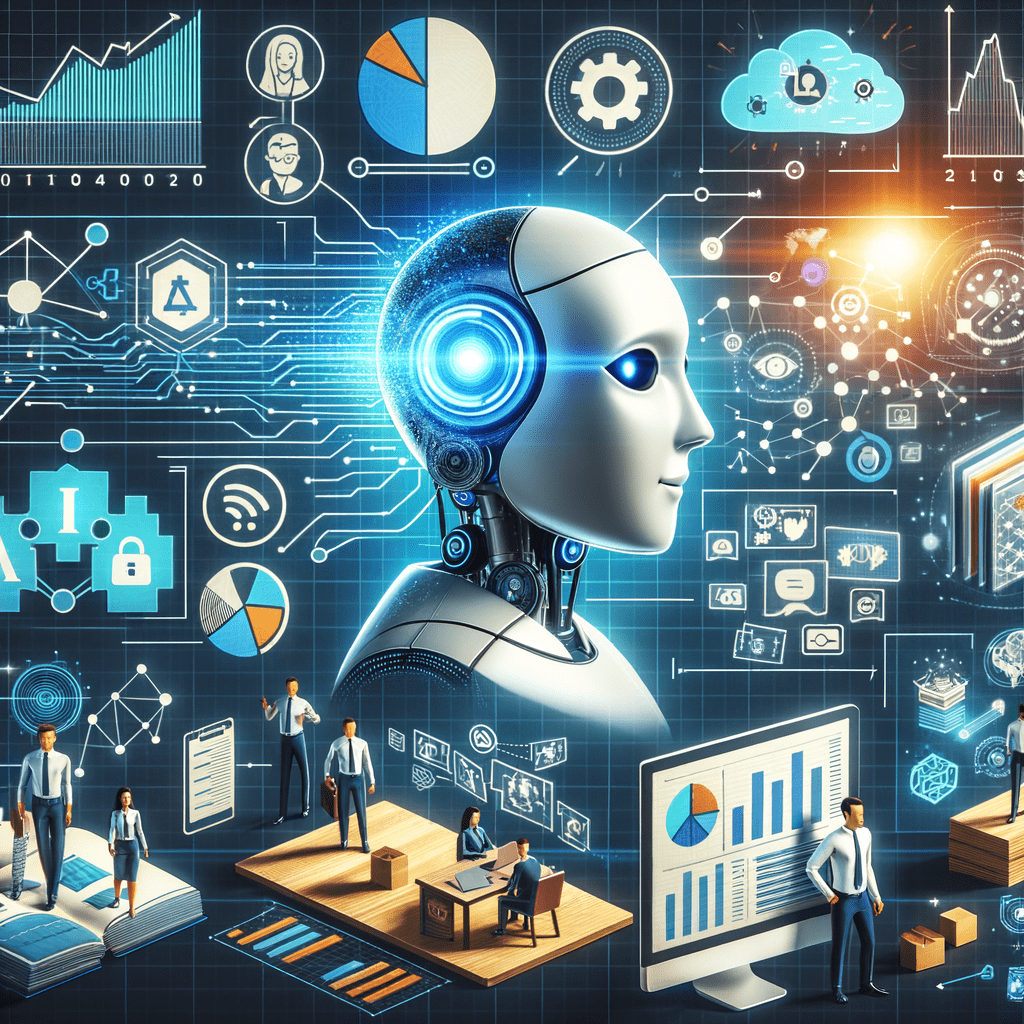
AI technology and small business professionals in a digital environment featuring data graphs, charts, and automation icons, illustrating the impact of AI on business operations.

What is AI for Small Businesses? A Practical Guide

As a small business owner, you’re always looking for an edge. You’re juggling many tasks, from managing employees to marketing your products. You might be wondering, what is AI for small businesses, and can it truly help? AI isn’t just for large corporations. It’s becoming essential for small businesses, too.

What is AI for small businesses? It uses intelligent software to automate business operations, analyze data, and improve profits. Think of AI as a highly efficient assistant handling everything from customer support to marketing.

What is AI for Small Businesses? Understanding the Basics

AI, or artificial intelligence, involves computer systems performing tasks that usually require human intelligence. These range from simple automation, like scheduling posts, to complex data analysis, like predicting customer behavior.

AI uses technologies like machine learning. This is where the software learns and improves over time.

Types of AI for Small Businesses

Several AI tools are becoming more accessible to small businesses:

  • Chatbots: These automated programs handle customer inquiries 24/7, freeing up your team. They’re improving at understanding and responding conversationally, creating a more human-like experience.
  • AI-Powered CRM: Customer Relationship Management (CRM) systems use AI to analyze customer data. This helps identify trends, sales opportunities, or personalize marketing campaigns. Some CRMs have AI integrations available, including those designed for e-commerce CRM, making it valuable for small business growth.
  • Generative AI: This technology creates various content, including text, images, and code. You can use it for marketing materials, social media posts, and even product descriptions. Popular tools like GPT-4 and others are gaining popularity for improved efficiency.
  • AI Analytics Tools: These tools analyze large amounts of data. They can find patterns you can use to improve your business. This is valuable for startups seeking lessons learned from other entrepreneurs.

Benefits of AI for Small Businesses

What does AI offer small businesses in terms of real benefits? It lets owners focus on high-level work, not repetitive tasks. More brain power is then spent on what matters most.

Increased Productivity

AI can handle routine tasks, freeing employees to focus on important work. This drives business growth and helps achieve competitive advantages.

The Small Business and Entrepreneurship Council (SBE) survey showed 76% of small business owners reported improved efficiency using AI tools for high-value tasks. This includes improving products, refining a pricing strategy, or prioritizing business sustainability. Salesforce reports that 67% of IT leaders are primarily focused on using generative AI to enhance efficiency and foster innovation.

Cost Savings

Automating tasks through AI reduces operational costs. This can mean anything from better business sustainability practices to managing payroll more efficiently.

Streamlining overall hiring and firing processes can also lead to significant savings. This data analysis helps improve security risks involved in financial tasks and also data entry, as fewer people will need access to sensitive information.

Improved Customer Service

AI provides 24/7 support. It improves response times for enhanced customer interactions and satisfaction. AI-powered chatbots offer an immediate response to inquiries. This also enhances customer relationship management.

Enhanced Decision-Making

AI analytics tools give you insights to make informed choices. Data analysis guides your decisions to move your business forward. Predictive analytics, another AI benefit, anticipates future trends and customer behavior.

Implementing AI in Your Small Business

Adding AI to a small business is straightforward. Small businesses often begin by implementing specific solutions, focusing on immediate pain points. For small teams, finding where specific needs arise within their own specific business makes implementation less overwhelming.

Start Small, Think Big

Start with one area where AI can have the most impact. This could be creating marketing videos or automating email responses. Small businesses can also use AI content creation tools to streamline marketing processes. There are many available effective ways to begin embracing AI.

Effective AI marketing strategies improve return on investment. Explore online resources for effective marketing tips to optimize campaigns and engage customers.

Training Your Team

Train your team on how to use new AI tools with real-world examples. Emphasize practical applications and how to use them to solve problems.

Show how these tools are designed to enhance productivity in areas such as improved schedule management and service operations.

Addressing AI Concerns for Small Businesses

Small business owners have valid concerns about how to implement AI within their structure.

Data Privacy and Security

Data privacy is crucial with increasing regulations. User data protection is a top priority, especially regarding security risks. Small businesses grow and thrive when considering and addressing privacy concerns with any AI solution.

The National Telecommunications and Information Administration emphasizes that it is important to recognize potential AI harms and risks when deploying new technologies.

Job Displacement

Some owners fear job displacement due to AI. Instead, AI can augment jobs, which benefits the team. AI frees up employees for tasks requiring human intervention. This improves customer service operations and also allows team members to generate ideas.

Gartner forecasts increasing growth of business areas improved through incorporating AI tools in coming years. How this can affect customer experience long term is still unknown. However, human connection, problem-solving skills and overall expertise with customer interactions will likely remain a high-value component that even complex tasks AI may struggle to replace fully without any human intervention.

The Importance of a Website

AI can’t help if customers can’t find your business. A website gives customers easy access to your products and services, and offers valuable insight for the marketing team on who comprises their target audience and any patterns they may exhibit for even more finely-tuned predictive analytics.

A website brings customers already interested in your offerings to you directly. This improves efficiency and reduces costs compared to traditional marketing that targets less receptive audiences.

A website also levels the playing field against larger competitors. AI content creation and analysis help maximize marketing conversions and improve website sales.

FAQs about What is AI for Small Businesses?

How is AI being used by businesses?

Businesses use AI to automate tasks like social media and customer service. They use AI for data analysis to find market trends, personalize content, improve customer relationship management and create new products.

AI also improves marketing and website sales. AI offers a wide range of tools for small business entrepreneurship to flourish and gain insight into how to deploy AI in new and more efficient ways within their businesses.

What is the best AI for businesses?

The best AI tool depends on the business problem you need to solve. Different tools are available for time management and project management solutions like Motion. Chatbots provide personalized support, while tools like Helium 10 offer assistance with product placement for sales on e-commerce platforms.

Businesses need to identify specific pain points to determine which tools can integrate to most effectively optimize operations. E-commerce businesses in particular may want to leverage AI’s capabilities to gain customer insights that improve both product development and create marketing materials more effective with generative AI assistance for AI content tailored to engage customers.

How do I get AI for my business?

Many AI tools and platforms are available online. These help small businesses integrate AI into their existing systems and enhance their marketing efforts.

AI-powered tools within popular marketing platforms offer a range of AI solutions to boost sales. Free AI tools may be limited, but there are often low cost or freemium subscription AI tools available that address very specific and narrow tasks where small businesses can gain efficiency, helping small businesses grow in a rapidly ever-changing landscape.

What percent of small businesses use AI?

Studies show about 25-29% of small businesses were using AI in 2024. Adoption rates are increasing every year, however, as AI can increase small business efficiencies.

Gartner predicts continued growth, and experts believe AI tools and other resources available through AI businesses can generate ideas that improve customer satisfaction and other benefits through effective ways of incorporating free AI into small businesses overall as new AI tools emerge within the overall expanding marketplace of providers, as well as new features to existing popular tools as providers expand to maintain competitive advantages against emerging trends, technologies and other resources becoming widely available. Small business growth overall continues to benefit as the wide range of powerful solutions offer unique benefits specific to almost any given industry. Small business owners seeking how AI improves overall small business entrepreneurship, as well as enhance customer service through automation, and improved personalization, or who want to further refine business operations by identifying hidden patterns or create marketing specific to the unique characteristics their customers consistently exhibit may want to deploy generative AI to their workflows to identify patterns, reduce security risks associated with redundant, highly repetitive manual processes that AI chatbots and similar services may offer, or automate content creation, or how chatbots provide service through human-like interactions can look at emerging services through industry experts, educational material offered through sites such as HubSpot and more. As long as new and improved business trends emerge, AI will likely find effective ways to provide powerful solutions that optimize growth, provide tools and streamline human effort for tasks like social media, e-commerce operations and other services.

Conclusion

What is AI for small businesses? It’s an opportunity to improve efficiency. By using AI, you save time, optimize your operations, and become more competitive. While integrating AI may seem daunting at first, starting with simple applications and focusing on clear business needs can help address those concerns.

As AI technology evolves, and businesses grow in size, understanding its impact on customer relationships and adapting workflows as more and more services and technologies emerge that solve pain points, as well as where AI tools may improve or replace areas previously only accomplished with a higher degree of human intervention to further optimize processes that provide substantial AI benefits, small business owners, through proper implementation of relevant AI tools can gain valuable time back, and increase revenue with fewer human resources needed for specific tasks and focus energy toward solving problems specific to their unique situations, industry and goals.
Facebook
Twitter
LinkedIn
Related Post
Lee Pomerantz, founder of eMediaAI, smiling in a cozy library setting, emphasizing human-centric AI consulting for SMBs.

Lee Pomerantz

Lee Pomerantz is the founder of eMediaAI, where the mantra “AI-Driven, People-Focused” guides every project. A Certified Chief AI Officer and CAIO Fellow, Lee helps organizations reclaim time through human-centric AI roadmaps, implementations, and upskilling programs. With two decades of entrepreneurial success - including running a high-performance marketing firm - he brings a proven track record of scaling businesses sustainably. His mission: to ensure AI fuels creativity, connection, and growth without stealing evenings from the people who make it all possible.

Leveraging AI for Small Business Success

Summarize This Page With Your Favorite AI

© 2025 eMediaAI.com. All rights reserved. Terms and Conditions | Privacy Policy 

Mini Case Study: Personalized AI Recommendations Boost E-Commerce Sales | eMediaAI

Mini Case Study: Personalized AI Recommendations
Boost E-Commerce Sales

Problem

Competing with giants like Amazon made it difficult for a small but growing e-commerce brand to deliver the kind of personalized shopping experience customers expect. Their existing recommendation engine produced generic suggestions that ignored customer intent, seasonality, and browsing behavior — resulting in low conversion rates and high cart abandonment.

Solution

The brand implemented a bespoke AI recommendation agent that delivered real-time personalization across their digital storefront and email campaigns.

  1. The AI analyzed browsing history, purchase patterns, session duration, abandoned carts, and delivery preferences.
  2. It then generated dynamic product suggestions optimized for cross-selling and upselling opportunities.
  3. Personalized recommendations extended to marketing emails, highlighting products relevant to each customer's unique shopping journey.
  4. The system continuously improved by learning from user engagement and conversion outcomes.

Key Capabilities: Real-time personalization • Behavioral analysis • Cross-sell optimization • Continuous learning from user engagement

Results

Average Cart Value

+35%

Increase driven by intelligent upselling and cross-selling.

Email Conversion

+60%

Lift in email conversion rates with personalized product highlights.

Cart Abandonment

Reduced

Significant reduction in cart abandonment, boosting total sales performance.

ROI Timeline

3 Months

The AI system paid for itself through improved revenue efficiency.

Strategy

In today's market, one-size-fits-all recommendations no longer work. Tailored AI systems designed around your customer data deliver the kind of personalized, dynamic experiences that drive loyalty and repeat purchases — helping niche e-commerce brands compete effectively against industry giants.

Why This Matters

  • Customer Expectations: Modern shoppers expect Amazon-level personalization regardless of brand size.
  • Competitive Edge: AI-powered recommendations level the playing field against larger competitors.
  • Data-Driven Insights: Continuous learning means the system gets smarter with every interaction.
  • Revenue Multiplication: Small improvements in conversion and cart value compound dramatically over time.
  • Customer Lifetime Value: Personalized experiences drive repeat purchases and brand loyalty.
Customer Story: AI-Powered Video Ad Production at Scale

Marketing Team Generates High-Quality
Video Ads in Hours, Not Weeks

AI-powered video production reduces campaign creation time by 95% using Google Veo

Customer Overview

Industry
Travel & Entertainment
Use Case
Generative AI Video Production
Campaign Type
Destination Marketing
Distribution
Digital & In-Flight

A marketing team responsible for promoting global travel destinations needed to produce a constant stream of fresh, high-quality video content for in-flight entertainment and digital advertising campaigns. With hundreds of destinations to showcase across multiple markets, traditional production methods couldn't keep pace with demand.

Challenge

Traditional production — involving creative agencies, travel shoots, and post-production — was costly, time-consuming, and logistically complex, often taking weeks to produce a single 30-second ad. This limited the team's ability to adapt campaigns quickly to market trends or seasonal travel spikes.

Key Challenges

  • Traditional video production required 3–4 weeks per 30-second ad
  • Physical location shoots created high costs and logistical complexity
  • Limited content volume constrained campaign variety and testing
  • Slow turnaround prevented rapid response to seasonal travel trends
  • Agency dependencies created bottlenecks and budget constraints
  • Maintaining brand consistency across dozens of destination videos

Solution

The marketing team implemented an AI-powered video production pipeline using Google's latest generative AI technologies:

Google Cloud Products Used

Google Veo
Vertex AI
Gemini for Workspace

Technical Architecture

→ Destination selection & campaign brief
→ Gemini for Workspace → Script generation
→ Style guides + reference imagery compiled
→ Google Veo → Cinematic video generation
→ Human review & approval
→ Deployment to digital & in-flight channels

Implementation Workflow

  1. The team selected a destination to promote (e.g., "Kyoto in Autumn").
  2. They used Gemini for Workspace to brainstorm and generate a compelling 30-second video script highlighting the city's cultural and visual appeal.
  3. The script, along with style guides and reference imagery, was fed into Veo, Google's generative video model.
  4. Veo produced a high-quality cinematic video clip that captured the desired tone and visuals — all in hours rather than weeks.
  5. The final assets were quickly reviewed, approved, and deployed across digital channels and in-flight entertainment systems.
Example Campaign: "Kyoto in Autumn"

Script generated by Gemini highlighting cultural landmarks, fall foliage, and traditional experiences. Veo created cinematic footage showing temples, cherry blossoms, and street scenes — all without a physical production crew.

Results & Business Impact

Time Efficiency

95%

Reduced ad production time from 3–4 weeks to under 1 day.

Cost Savings

80%

Eliminated physical shoots and editing labor, saving ≈ $50,000 annually for mid-size campaigns.

Creative Scalability

10x Output

Enabled production of dozens of destination videos per month with brand consistency.

Engagement Lift

+25%

Increased click-through rates on destination ads due to richer, faster content rotation.

Key Benefits

  • Rapid campaign iteration enables A/B testing and seasonal responsiveness
  • Dramatically lower production costs allow coverage of niche destinations
  • Consistent brand voice and visual quality across all generated content
  • Reduced dependency on external agencies and production crews
  • Faster time-to-market improves competitive positioning in travel marketing
  • Environmental benefits from eliminating unnecessary travel and location shoots

"Google Veo has fundamentally changed how we approach video content creation. We can now test dozens of creative concepts in the time it used to take to produce a single video. The quality is cinematic, the turnaround is lightning-fast, and our engagement metrics have never been better."

— Director of Digital Marketing, Travel & Entertainment Company

Looking Ahead

The marketing team plans to expand their AI-powered production capabilities to include:

  • Personalized destination videos tailored to customer preferences and travel history
  • Multi-language versions of campaigns generated automatically for global markets
  • Real-time content updates based on seasonal events and local festivals
  • Integration with customer data platforms for hyper-targeted advertising

By leveraging Google Cloud's generative AI capabilities, the organization has transformed video production from a bottleneck into a competitive advantage — enabling creative agility at scale.

Customer Story: Automated Podcast Creation from Live Sports Commentary

Sports Broadcaster Transforms Live Commentary
into Same-Day Highlight Podcasts

Automated podcast creation reduces production time by 93% using Google Cloud AI

Customer Overview

Industry
Sports Broadcasting & Media
Use Case
Content Automation
Size
Mid-sized Sports Network
Region
North America

A regional sports broadcaster manages hours of live event commentary daily across multiple sporting events. The organization needed to transform raw commentary into engaging, shareable content that could be distributed to fans immediately after events concluded.

Challenge

Creating highlight reels and post-event summaries manually was slow and resource-intensive, often taking an entire production team several hours per event. By the time the recap was ready, fan interest and social engagement had already peaked — leading to missed opportunities for timely content distribution and reduced viewer retention.

Key Challenges

  • Manual transcription and editing required 5+ hours per event
  • Delayed content release reduced fan engagement and social media reach
  • High production costs limited content output for smaller events
  • Inconsistent quality across multiple simultaneous events
  • Limited scalability during peak sports seasons

Solution

The broadcaster implemented an automated podcast creation pipeline using Google Cloud AI and serverless technologies:

Google Cloud Products Used

Cloud Storage
Speech-to-Text API
Vertex AI
Cloud Functions

Technical Architecture

→ Live commentary audio → Cloud Storage
→ Cloud Function trigger → Speech-to-Text
→ Time-stamped transcript generated
→ Vertex AI analyzes transcript for exciting moments
→ AI generates 30-second highlight scripts
→ Polished podcast ready for distribution

Implementation Workflow

  1. Live commentary audio was captured and stored in Cloud Storage.
  2. A Cloud Function triggered Speech-to-Text to generate a full, time-stamped transcript.
  3. The transcript was sent to a Vertex AI generative model with a prompt to detect the top 5 exciting moments using cues like keywords ("goal," "crash," "overtake"), exclamations, and sentiment.
  4. Vertex AI generated short 30-second highlight scripts for each key moment.
  5. These scripts were converted into audio using text-to-speech or recorded by a human host — producing a polished "daily highlights" podcast in minutes instead of hours.

Results & Business Impact

Time Savings

93%

Reduced highlight production from ~5 hours per event to 20 minutes.

Cost Reduction

70%

Automated workflows cut production costs, saving an estimated $30,000 annually.

Fan Engagement

+45%

Same-day release of highlight podcasts boosted daily listens and social media shares.

Scalability

Multi-Event

System scaled effortlessly across multiple sports events year-round.

Key Benefits

  • Same-day content delivery captures peak fan interest and engagement
  • Smaller production teams can maintain consistent output across multiple events
  • Automated quality and formatting ensures professional results at scale
  • Reduced time-to-market improves competitive positioning in sports media
  • Lower operational costs enable coverage of more sporting events

"Google Cloud's AI capabilities transformed our production workflow. What used to take our team an entire afternoon now happens automatically in minutes. We're able to deliver content while fans are still talking about the game, which has completely changed our engagement metrics."

— Head of Digital Content, Sports Broadcasting Network