
Fort Wayne manufacturers face an immediate opportunity to harness AI-driven Industry 4.0 tools that boost throughput, reduce downtime, and protect workforce value through human-centric design. This article explains how AI solutions—ranging from predictive maintenance and machine-vision quality inspection to supply-chain optimization and AI literacy training—operate in the context of Fort Wayne manufacturing and what measurable ROI leaders can expect. Readers will learn specific local challenges AI addresses, the human-centric implementation sequence that preserves jobs and raises productivity, ethical governance checkpoints relevant to Indiana operations, and practical readiness steps for small and medium manufacturers. The guide maps use cases, data needs, timelines, and vendor engagement models so plant managers and operations leaders can prioritize pilots and scale responsibly. Throughout, we emphasize ethical AI and workforce empowerment while noting how local consulting expertise supports rapid, accountable adoption.
This shift towards intelligent, connected ecosystems is further elaborated by research bridging current advancements with future human-centric visions.
AI & ML in Manufacturing: Bridging Industry 4.0 to Human-Centric Industry 5.0 AI and ML integrations have rustled a new revolution in mechanical manufacturing, making the traditional systems intelligent, connected ecosystems in tune with Industry 4.0. This paper further extends the discussion to understand the paradigm shift focusing on Industry 5.0, which would lay more emphasis on human-AI collaboration, sustainability, and resilience. AI-Driven Mechanical Manufacturing: Bridging Industry 4.0 and the Human-Centric Vision of Industry 5.0, AA Kadam, 2025
Why Should Fort Wayne Manufacturers Embrace AI Solutions?
AI solutions for manufacturing combine sensor-fed analytics, machine learning models, and automation to convert operational data into timely decisions that cut waste and improve quality. These systems work by ingesting sensor data pipelines and edge-device telemetry, applying anomaly-detection ML models, and surfacing actionable alerts that reduce mean time to repair and improve yield. The specific benefit for Fort Wayne plants is faster troubleshooting, fewer production stops, and clearer quality signals that increase output without proportionally increasing headcount. Embracing AI now helps local manufacturers remain competitive in the Midwest supply network while improving workplace safety and process transparency. The next section maps local challenges to AI capabilities so teams can prioritize pilot projects.
Manufacturers in Fort Wayne should consider the following benefits when assessing AI opportunities:
- Faster problem detection and reduced downtime through predictive analytics and anomaly detection.
- Higher product quality and lower scrap rates via machine-vision quality inspection and automated feedback loops.
- Improved supply-chain resilience with demand forecasting and inventory optimization that reduce stockouts.
- Safer, more efficient operations by augmenting worker decisions with explainable AI alerts and human-in-the-loop oversight.
These benefits translate into tangible ROI: early pilots often show reduced unplanned downtime by double-digit percentages within months, enabling rapid reinvestment in expansion or workforce development.
What Local Manufacturing Challenges Can AI Address?
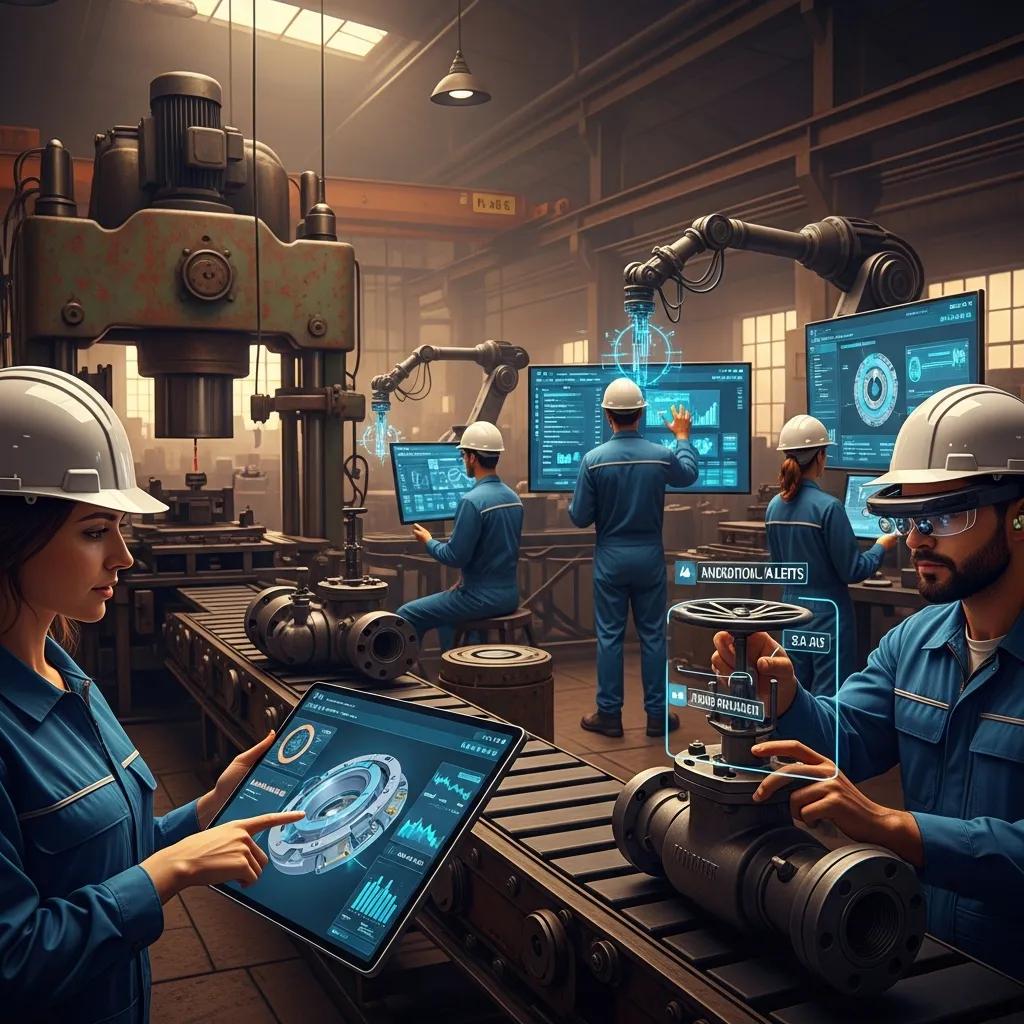
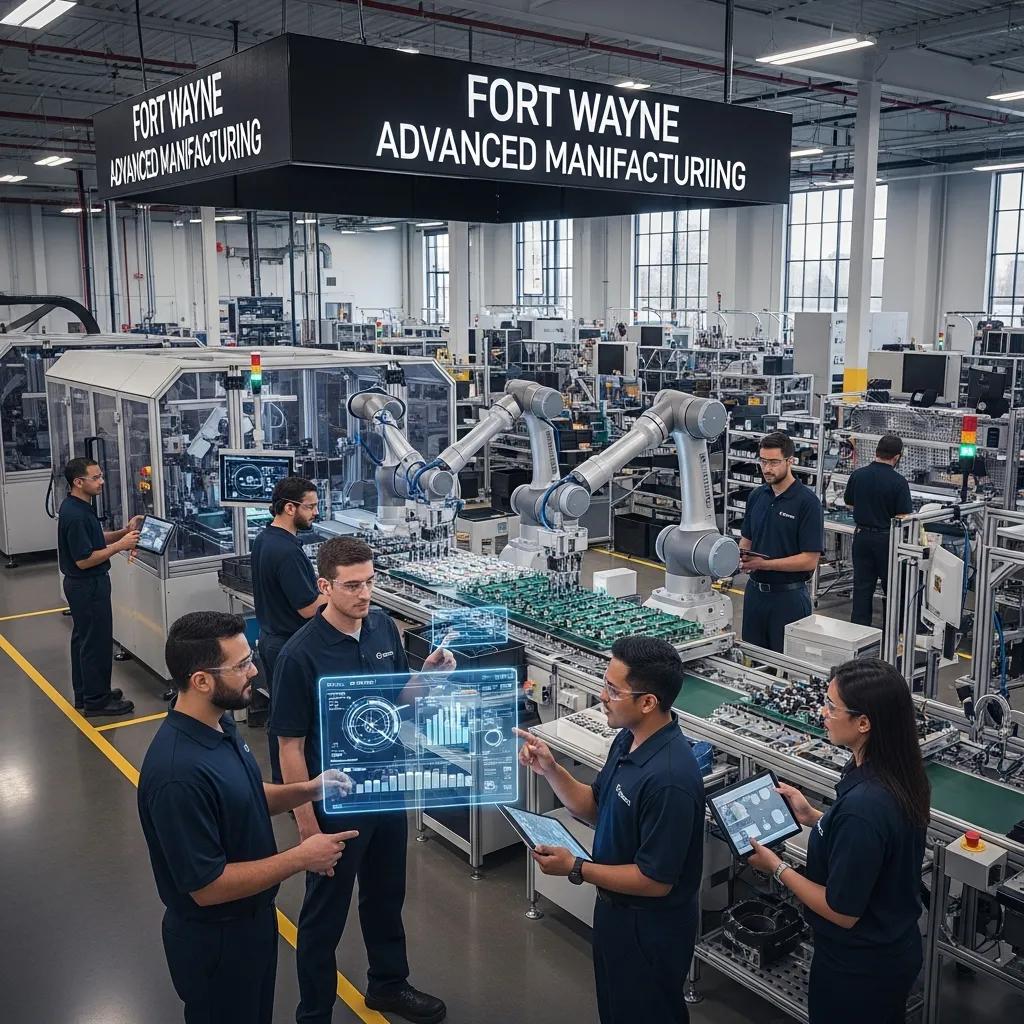
Fort Wayne manufacturers commonly face aging equipment, intermittent skilled-operator availability, and complex supplier dependencies that collectively limit throughput and quality. Predictive maintenance AI links vibration, temperature, and cycle-rate sensors to anomaly-detection models that flag bearings, motors, and drive problems before failure, reducing emergency repairs. Machine-vision systems compensate for manual inspection variability, catching defects across high-speed lines where human inspection lags. Supply-chain analytics address local supplier volatility by forecasting demand and optimizing reorder points, which smooths production schedules. These AI capabilities tackle skills gaps and legacy-equipment constraints while preserving operator roles through augmentation and targeted upskilling.
Timely detection and better quality control also support local competitiveness: deploying sensors and ML models creates a data-driven baseline that helps operations managers make evidence-based decisions, improving throughput and reducing costs while maintaining workforce dignity and oversight.
How Does AI Drive Operational Efficiency and ROI in Indiana SMBs?
AI drives ROI by converting routine data into prioritized actions that reduce cycle time, scrap, and downtime while improving throughput and labor productivity. Mechanisms include predictive maintenance that reduces unplanned stoppages, process-parameter optimization that squeezes yield from existing assets, and robotic or software automation that eliminates repetitive tasks. For Indiana SMBs, pilot projects focused on a single bottleneck often yield payback within 6–12 months through labor hours saved and fewer defective units. Analytics also enable continuous improvement: models refine predictions as more sensor data accumulates, which compounds savings over time.
Short case-style examples show typical outcomes: a predictive maintenance pilot that cut downtime by 25% within three months, and a machine-vision deployment that reduced defects by 40% on a critical assembly line. These improvements translate directly to improved margin and customer reliability, making AI a practical investment for regional manufacturers.
Our Human-Centric Approach to AI in Fort Wayne Manufacturing
Human-centric AI implementation emphasizes people-first sequencing—assess, co-design, implement, train, then govern—so technology augments rather than replaces labor. The approach starts with baseline assessments of data readiness and operator workflows, then designs small pilots co-created with frontline workers to ensure system outputs are usable and explainable. Implementation couples lightweight integrations to existing MES or PLC systems with edge-device deployments where latency matters, followed by role-based training and governance processes that keep humans in control. Measured adoption metrics include alert acknowledgment rates, reduction in manual interventions, and worker-reported trust scores.
Practical implementation examples include a two-week assessment identifying sensor needs and a six-week pilot that integrated machine-vision inspections with operator dashboards. The people-first method ensures changes stick and that AI outputs are interpreted by trained staff, which accelerates adoption and preserves institutional knowledge. At the end of this section we illustrate available service types used to execute each phase.
eMediaAI supports human-centric deployments in Fort Wayne through several service types that enable execution and long-term adoption. Examples include fractional leadership to guide strategy, system integration and deployment support to connect sensors and ML models to operations, and AI literacy workshops that equip teams to interpret and act on AI outputs. These offerings illustrate a complete path from assessment to sustained governance while keeping workers central to design and decision-making.
What Is Human-Centric AI and Why Is It Vital for Workforce Empowerment?
Human-centric AI places people at the center of design, ensuring systems augment skills, provide transparent explanations, and include human-in-the-loop controls. Mechanistically, this means models deliver ranked suggestions and confidence scores rather than binary decisions, and interfaces support operator feedback that retrains models. The result is improved safety, higher job satisfaction, and faster adoption because workers retain agency and understanding over automated recommendations. In manufacturing, this approach reduces resistance by aligning AI outputs with existing skills and workflows, enabling redeployment of staff to higher-value tasks while technical systems handle repetitive sensing and alerting.
This approach aligns with the broader Industry 5.0 paradigm, which prioritizes human well-being and collaboration over mere efficiency.
Human-Centric Industry 5.0: Augmenting Intelligence & Well-being Industry 5.0 represents a paradigm shift from automation-dominated production models toward a human-centric approach that emphasizes collaboration, resilience, and sustainability. Unlike Industry 4.0, which prioritized efficiency through digital transformation, Industry 5.0 seeks to augment human intelligence and well-being by integrating emerging technologies with cognitive and ergonomic design principles. The rise of human-centric manufacturing in the industry 5.0 era, L Yanytska, 2025
This combination of explainability and worker feedback creates a virtuous cycle: as operators trust the system, they provide better labels and feedback, which improves model accuracy and business outcomes while protecting workforce interests.
How Does eMediaAI’s People-First Strategy Enhance AI Adoption?
eMediaAI’s people-first tactics begin with stakeholder workshops that co-design pilot success criteria, followed by short iterative pilots that validate assumptions and collect operator feedback. Pilots include clear acceptance metrics—alert response time, reduction in manual checks, and operator trust surveys—that inform phased rollouts. Change management includes on-the-job coaching, role redesign sessions, and regular retrospective meetings to ensure continuous improvement.
By embedding workers in design and measurement, the strategy turns early skeptics into champions, which increases adoption rates and creates documented governance for scaling AI across additional lines or facilities.
What Ethical AI Principles Guide Manufacturing AI Solutions in Indiana?

Ethical AI for manufacturing enforces principles of fairness, transparency, privacy, safety, and accountability throughout model development and deployment. Practically, this means documenting data lineage, applying explainability tools to model outputs, conducting bias and safety audits, and maintaining human oversight for safety-critical alerts. Implementing these principles reduces legal and reputational risk while ensuring workers understand how decisions are made and can contest or correct automated recommendations. Governance also specifies data retention, access controls, and audit trails that align with broader frameworks and emerging state-level expectations.
Which Responsible AI Frameworks Ensure Fairness and Transparency?
Frameworks such as the NIST AI Risk Management Framework provide structured controls for assessing risk, mapping system components, and defining governance steps across a model’s lifecycle. Mapping framework controls to factory use cases involves matching risk categories—like safety-critical false negatives—to mitigations such as redundancy, human review gates, and fail-safe limits. Compliance steps include audit-ready documentation of model datasets, validation test results, and monitoring plans that measure drift, fairness, and safety. This alignment prepares manufacturers for internal audits and external scrutiny while enabling consistent practices across facilities.
How Does Ethical AI Mitigate Risks and Protect Workforce Interests?
Ethical AI mitigates risks by formalizing hazard analysis, implementing monitoring and alert thresholds, and preserving human override capabilities where safety or employment impacts exist. Practical safeguards include anonymizing personnel identifiers in analytics pipelines, creating transparent decision logs for each automated recommendation, and instituting role-redesign pathways supported by retraining commitments. Monitoring loops measure for unintended bias and operational drift, triggering model retraining or rollback when performance falls outside safe bounds. These measures protect workers from unfair outcomes and ensure organizations address both technical and human impacts proactively.
Combining technical controls with workforce policies—training, redeployment, and clear communication—reduces fear of displacement and fosters collaborative human-AI workflows that improve productivity and job quality.
Which AI Use Cases Deliver High Impact for Fort Wayne Manufacturers?
High-impact AI use cases for Fort Wayne plants prioritize predictable ROI, manageable data needs, and clear workforce benefits. Predictive maintenance, machine-vision quality inspection, and supply-chain optimization consistently rank highest because they convert existing sensor and production data into measurable uptime and yield improvements. Selecting a first use case depends on data availability and business priorities—machines with known failure modes suit predictive maintenance, while high-volume visual inspection tasks favor machine vision. The table below compares core use cases on scope, typical ROI, implementation time, data requirements, and workforce impact to aid prioritization.
The following comparison clarifies practical trade-offs for initial pilots.
How Does Predictive Maintenance Reduce Downtime and Costs?
Predictive maintenance reduces downtime by combining sensor data, edge processing, and ML models to detect early signs of degradation before catastrophic failure. The mechanism follows a simple pipeline: sensors collect vibration and temperature signals, feature extraction transforms raw streams into indicators, models predict anomalies, and operators receive prioritized alerts with recommended actions. Typical impact metrics from industry practice show double-digit reductions in unplanned downtime and lower mean time to repair, directly lowering maintenance costs and lost-production penalties. Implementation checklists focus on selecting pilot assets, installing necessary sensors, validating models against known failures, and training maintenance teams to interpret alerts.
Quick wins often involve retrofitting sensors to a handful of critical machines, proving model value, and scaling sensors and models across similar equipment classes for compounded savings.
What Role Does AI Play in Quality Control and Supply Chain Optimization?
AI-powered machine vision improves inspection consistency by applying trained models to high-speed camera feeds, detecting defects at rates and accuracies that exceed manual inspection, and providing classification for root-cause analysis. Supply-chain AI leverages forecasting and optimization algorithms that balance inventory levels, lead-times, and supplier reliability to reduce stockouts and excess inventory. Together, these systems close quality and supply gaps: quality models reduce scrap and rework, while supply-chain models smooth material availability for uninterrupted production. Data and integration needs vary—vision systems require labeled image datasets and camera integrations, while supply-chain analytics need clean ERP and order-history feeds.
The effectiveness of such systems in ensuring product quality is well-documented in various studies.
Machine Vision for Automatic Quality Inspection in Manufacturing This paper addresses the problem of automatic quality inspection in assembly processes by discussing the design of a computer vision system realized by means of a heterogeneous approach. Robust and high-performance machine vision system for automatic quality inspection in assembly processes, F Frustaci, 2022
These complementary use cases reduce costs and improve customer satisfaction by delivering more consistent output and fewer late shipments, enabling manufacturers to compete more effectively.
How Can Fort Wayne SMBs Prepare for Industry 4.0 with AI Consulting?
Preparation for Industry 4.0 begins with an assessment of data readiness, prioritized use cases, and governance requirements to create a practical roadmap for pilots and scale. A readiness checklist typically audits sensor coverage, data quality, connectivity to edge devices or cloud, and organizational capacity for change management. Engagement models range from short, decision-enabling assessments to longer fractional leadership that embeds AI strategy into operations.
The following comparison helps operations leaders weigh trade-offs between short engagements and ongoing fractional leadership.
What Is the AI Opportunity Blueprint™ and How Does It Accelerate Readiness?
The AI Opportunity Blueprint™ is a 10-day structured roadmap that identifies high-value AI use cases, assesses data and process readiness, recommends a technology stack, and provides a risk assessment to enable fast, informed decisions. This rapid engagement produces deliverables—use-case prioritization, a cost-benefit sketch, recommended integrations, and mitigation strategies—that let teams choose a pilot with confidence. Because it compresses discovery and decision-making into a concise timeframe, the Blueprint shortens time-to-pilot and reduces exploratory costs often associated with larger consulting engagements. For organizations looking to move from hypothesis to action quickly, the Blueprint provides an actionable, bounded path forward that clarifies next steps and resource needs.
The AI Opportunity Blueprint™ (10-day structured roadmap, $5,000) accelerates readiness by delivering decision-ready outputs that enable immediate pilot initiation with a clear scope and measurable objectives.
How Do Fractional Chief AI Officer Services Support Sustainable AI Integration?
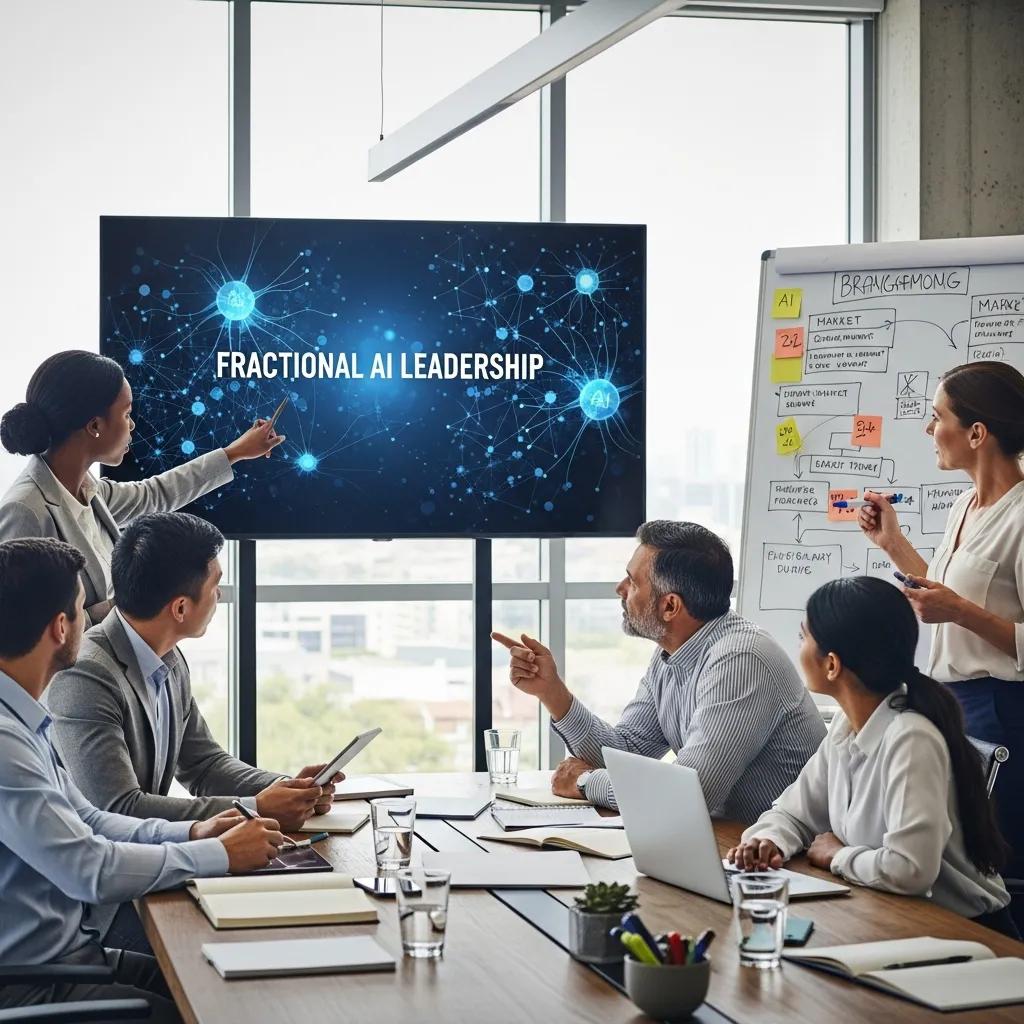
A fractional Chief AI Officer (fCAIO) provides strategic oversight, governance, and program management without full-time executive cost, guiding roadmap execution, vendor selection, and model governance. Typical responsibilities include defining KPIs, aligning AI initiatives with business goals, setting up monitoring and validation pipelines, and coordinating training and change management across stakeholders. Organizations engage fractional leadership when they need sustained strategic focus to scale pilots into production while maintaining accountability and risk controls. The fCAIO model supports sustainable integration by ensuring projects remain aligned to ROI, embedding governance, and mentoring internal teams for eventual knowledge transfer and independence.
Fractional leadership balances immediate tactical delivery with long-term institutionalization of AI capabilities, reducing the chances of orphaned pilots and inconsistent implementations.
What Workforce Upskilling and Support Does eMediaAI Provide for AI Adoption?
Effective adoption requires structured training, role-based learning, and change management that turns pilots into repeatable practices across lines. Training programs typically cover AI literacy for leadership, operational analytics for supervisors, and hands-on machine-vision or model-interpretation workshops for operators. Measurable outcomes include improved alert response rates, reduced manual rework, and higher operator confidence scores. The table below summarizes typical training programs, target audiences, and expected KPIs to help workforce planners select appropriate modules.
Below is a practical comparison of training offerings and expected outcomes for manufacturing teams.
How Does AI Literacy Training Empower Manufacturing Teams?
AI literacy training demystifies core concepts—data, models, metrics, and limitations—so managers and operators can interpret system outputs and contribute meaningful feedback. Course modules typically include fundamentals of ML, hands-on sessions with dashboards, anomaly case studies, and protocols for escalating model-flagged issues. Delivery modes range from interactive workshops to on-the-job coaching that embeds learning in daily routines. Expected KPIs include higher adoption rates, faster resolution of alerts, and reduced inspection errors as teams learn to trust and validate model outputs.
Empowered teams accelerate pilot success and provide the human data labeling and contextual knowledge that keeps models accurate and relevant to local operations.
What Strategies Mitigate Job Displacement Fears and Promote Collaboration?
Mitigating displacement fears requires transparent communication, co-design of new role descriptions, and visible upskilling pathways that move workers into higher-value roles. Key tactics include joint human-AI process mapping sessions, redeployment plans for repetitive tasks, and incentive structures that reward adoption and improvement suggestions. Measurement includes retention and satisfaction scores, percent of workers retrained into elevated roles, and documented productivity improvements. These strategies convert anxiety into engagement by showing concrete opportunities for career growth through augmented work.
When organizations couple clear policies with training and co-design, AI becomes a tool that elevates workforce skills and creates measurable value for both employees and the business.
For Fort Wayne manufacturers seeking expert guidance on this path, eMediaAI—an AI consulting firm based in Fort Wayne, Indiana led by Lee Pomerantz—offers practical services aligned with these readiness and training approaches. The company emphasizes an “AI-Driven. People-Focused.” posture and provides targeted engagements to move teams from assessment to governed production.
For teams ready to act, consider engaging with these options or scheduling a conversation to match pilots with business priorities and workforce plans. eMediaAI can help prioritize use cases, run an AI Opportunity Blueprint™ (10-day structured roadmap, $5,000), and discuss fractional leadership or training deployments to ensure ethical, human-centric adoption.
Frequently Asked Questions
What are the key benefits of AI solutions for small and medium manufacturers in Fort Wayne?
AI solutions offer numerous benefits for small and medium manufacturers in Fort Wayne, including enhanced operational efficiency, reduced downtime, and improved product quality. By leveraging predictive maintenance, manufacturers can anticipate equipment failures, minimizing unplanned stoppages. Additionally, AI-driven quality inspection systems can significantly decrease defect rates, leading to higher customer satisfaction. These technologies not only streamline processes but also empower workers by augmenting their capabilities, ultimately resulting in a more competitive position within the Midwest supply chain.
How can manufacturers in Fort Wayne ensure ethical AI implementation?
To ensure ethical AI implementation, manufacturers in Fort Wayne should adopt principles of fairness, transparency, and accountability. This involves documenting data lineage, conducting bias audits, and maintaining human oversight in decision-making processes. Establishing clear governance frameworks that outline data retention policies and access controls is crucial. Regular training and communication with employees about how AI systems operate can also foster trust and understanding, ensuring that the workforce feels secure and informed about the technology being used in their environment.
What role does workforce training play in successful AI adoption?
Workforce training is essential for successful AI adoption as it equips employees with the necessary skills to interpret and act on AI outputs. Training programs should focus on AI literacy, operational analytics, and hands-on workshops tailored to specific roles. By enhancing employees’ understanding of AI technologies, organizations can improve alert response rates, reduce errors, and foster a culture of collaboration between humans and AI systems. This investment in training not only boosts confidence but also ensures that the workforce can effectively leverage AI to enhance productivity.
What are the common challenges faced by manufacturers when integrating AI?
Manufacturers often encounter several challenges when integrating AI, including data quality issues, resistance to change, and a lack of skilled personnel. Ensuring that data is clean, relevant, and accessible is critical for effective AI implementation. Additionally, overcoming employee skepticism about AI’s role in the workplace requires transparent communication and involvement in the design process. Finally, manufacturers may struggle to find qualified personnel who can manage and interpret AI systems, highlighting the need for targeted training and upskilling initiatives.
How can AI improve supply chain management for Fort Wayne manufacturers?
AI can significantly enhance supply chain management for Fort Wayne manufacturers by providing advanced analytics for demand forecasting and inventory optimization. By analyzing historical data and market trends, AI systems can predict demand fluctuations, helping manufacturers maintain optimal inventory levels and reduce stockouts. This leads to smoother production schedules and lower carrying costs. Furthermore, AI can identify supplier performance issues, enabling manufacturers to make informed decisions that enhance supply chain resilience and efficiency.
What is the significance of human-centric AI in manufacturing?
Human-centric AI is vital in manufacturing as it prioritizes the augmentation of human capabilities rather than replacement. This approach ensures that AI systems are designed with user feedback in mind, promoting transparency and trust. By involving workers in the design and implementation phases, manufacturers can create systems that align with existing workflows and enhance job satisfaction. Ultimately, human-centric AI fosters a collaborative environment where technology and human skills work together to drive productivity and innovation.
How can manufacturers measure the success of their AI initiatives?
Manufacturers can measure the success of their AI initiatives through key performance indicators (KPIs) such as reductions in downtime, improvements in product quality, and increased operational efficiency. Tracking metrics like alert response times, defect rates, and overall equipment effectiveness (OEE) provides insights into the impact of AI on production processes. Additionally, employee feedback and engagement levels can serve as qualitative measures of success, indicating how well the workforce has adapted to and embraced the new technologies.
Conclusion
Fort Wayne manufacturers stand to gain significantly from adopting AI solutions, which enhance operational efficiency, reduce downtime, and improve product quality. By prioritizing ethical, human-centric AI implementations, organizations can empower their workforce while ensuring transparency and accountability in decision-making processes. Engaging with eMediaAI can help you navigate this transformative journey, from identifying high-impact use cases to implementing effective training programs. Take the next step towards a smarter, more resilient manufacturing future by exploring our consulting services today.