


How AI Boosts Employee Well-Being with People-First Strategies
Employee wellbeing refers to the holistic state of an individual’s physical, mental, and emotional health at work, and improving it has direct, measurable effects on productivity, retention, and customer experience. This article explains how AI — when applied with people-first ethics and clear governance — reduces stress and increases job satisfaction by automating tedious tasks, personalizing wellness supports, and surfacing early signals of burnout. You will learn specific AI mechanisms such as predictive burnout analytics, AI-driven scheduling, and personalized wellness recommendations, along with practical metrics to measure ROI and safeguards to protect privacy and fairness. The guide also maps step-by-step implementation advice for small and mid-sized businesses, including low-risk pilots and leadership support models that make scaling practical and responsible. Throughout, the focus is on evidence-informed tactics and operational practices that help leaders move from intent to measurable improvement in employee wellbeing using AI in ways that prioritize people over process.
Further research underscores the transformative potential of AI in enhancing employee wellness through personalized health strategies and predictive insights.
AI’s Impact on Employee Wellness: Personalized Health & Predictive Analytics
Employee wellness and well-being programs are crucial for maintaining a healthy, productive workforce. The integration of Artificial Intelligence (AI) in these programs has revolutionized how organizations support their employees’ physical, mental, and emotional health. This paper explores the impact of AI on employee wellness and well-being programs, focusing on personalized health recommendations, predictive analytics for early intervention, and real-time monitoring of wellness metrics.
Why Is Employee Wellbeing Critical for Business Success Today?
Employee wellbeing is foundational to performance because healthy, engaged workers are more productive, less likely to leave, and contribute better customer experiences. Recent research and surveys in 2023 and 2024 continue to show high prevalence of workplace stress and burnout, and those conditions translate into quantifiable losses in hours, innovation, and client satisfaction. Improving wellbeing reduces absenteeism, decreases turnover costs, and strengthens organizational resilience, which together support revenue stability and growth. Leaders who prioritize wellbeing also create cultures where employees can focus on higher-value work rather than administrative burdens, increasing discretionary effort and long-term institutional knowledge. Understanding these links helps justify targeted investments in wellbeing technologies that are measured against clearly defined business KPIs.
Echoing these findings, recent studies further delve into how AI integration is reshaping the modern workplace and influencing employee well-being, including their perceptions and concerns.
AI’s Influence on Employee Well-being in the Workplace
Integrating Artificial Intelligence (AI) into employee management has significantly reshaped the dynamics of the modern workplace. This study explores how AI impacts employee well-being, focusing on perceptions, concerns, behaviors, and outcomes.
Employees and organizations face several concrete impacts when wellbeing deteriorates:
- Increased absenteeism and short-term sick leave that interrupts workflows and raises operational costs.
- Higher voluntary turnover, which drives recruiting and onboarding expenses and reduces institutional know-how.
- Lower engagement and discretionary effort, resulting in diminished service quality and slower innovation.
These impacts make it clear that addressing wellbeing is not a purely HR activity but a strategic business priority; the next section explains the economic and human costs in greater detail and sets up how AI can help intervene earlier.
What Are the Costs of Poor Employee Wellbeing and Burnout?
Poor wellbeing and burnout impose direct financial costs such as increased healthcare claims, overtime expenditures to cover absent staff, and recruitment costs for replacements. Indirectly, organizations pay through lost productivity when employees are disengaged, through mistakes or lower-quality outputs, and through the erosion of team morale that amplifies churn. Human costs include diminished career trajectories, mental health struggles, and reduced life satisfaction for affected employees, which in turn can damage employer brand and long-term talent pipelines. Quantifying these effects begins with tracking absenteeism rates, turnover velocity, and engagement survey trends, then translating those trends into salary-weighted lost hours and replacement cost estimates. Recognizing the mix of direct and indirect costs makes it easier to prioritize interventions that target root causes rather than symptoms, which is where AI’s predictive and personalization capabilities become relevant.
This perspective is further supported by research highlighting burnout not merely as a psychological state, but as a critical strategic predictor of preventable workforce turnover.
Burnout as a Strategic Predictor of Workforce Turnover
Building on emerging studies, in this paper, burnout is presented not just as a psychological state but as a strategic predictor of preventable turnover – a manageable risk to workforce
How Does AI Address Workplace Stress and Engagement Challenges?
AI addresses workplace stress and engagement challenges through three complementary mechanisms: automation of repetitive work, personalization of support resources, and analytics that surface early warnings of risk. Automation removes low-value tasks that consume attention and time, personalization increases relevance and participation in wellbeing programs, and analytics enable proactive outreach before problems escalate. These capabilities work together to reduce cognitive load and emotional strain while freeing managers to focus on coaching and strategic activities. In practice, combining automation with human-centered escalation pathways ensures technology augments rather than replaces human judgment, which preserves trust and improves adoption. The next major section will unpack how personalization works and what forms it takes across mental health, fitness, and financial wellness programs.
How Does AI Personalize Employee Wellness Programs for Better Outcomes?
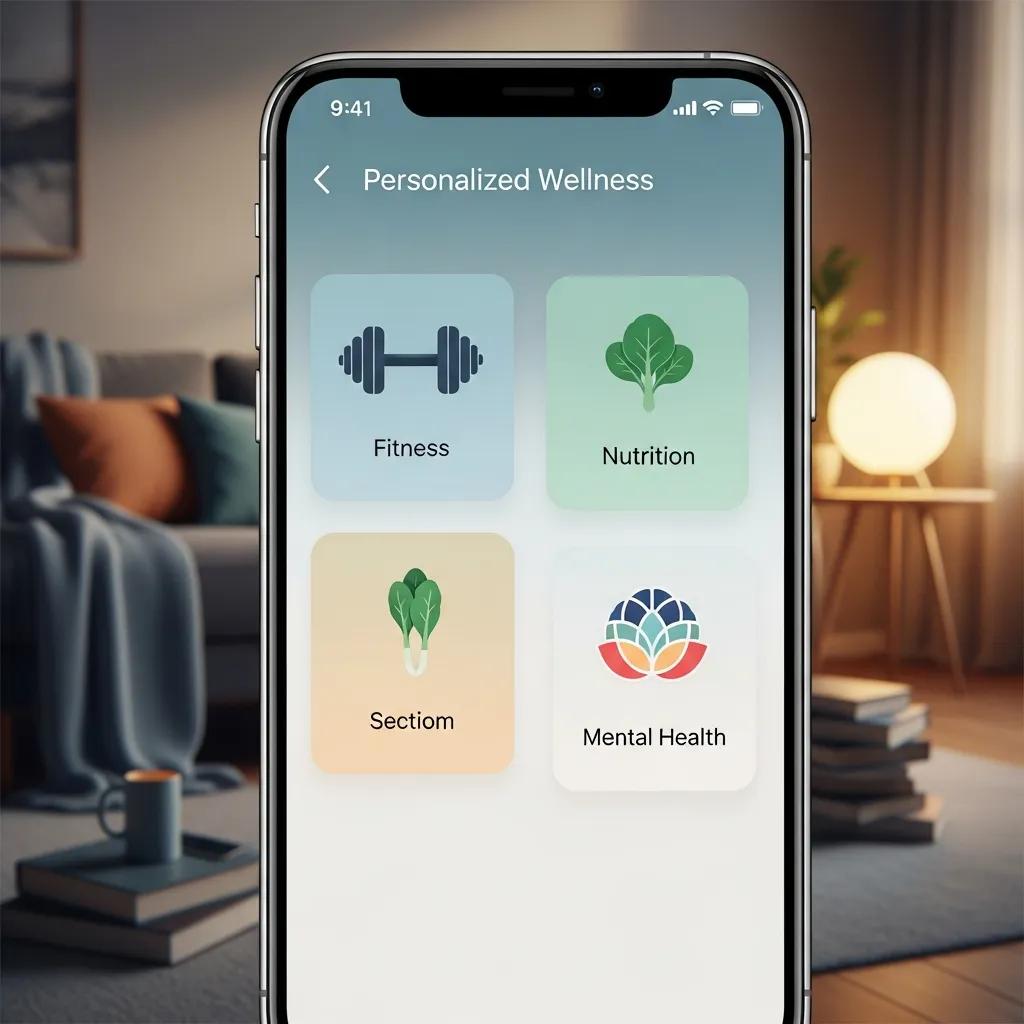
AI personalizes employee wellness by using individual preferences, engagement signals, and anonymized health indicators to tailor recommendations, timing, and escalation pathways for support. Mechanisms include recommender systems that match content to user goals, NLP-based triage that routes mental health queries, and behavioral nudges timed to work patterns to increase adherence. The net benefit is greater relevance, higher participation rates, and faster, measurable improvements in wellbeing outcomes compared with one-size-fits-all programs. Personalization must be paired with consent, data minimization, and clear opt-out choices to maintain trust and ethical compliance. Below are examples of how AI techniques map to data types and personalization outcomes for practical planning.
This table clarifies which employee data types feed which AI techniques and what personalization outcomes to expect.
| Employee Data Type | AI Technique | Personalization Outcome |
|---|---|---|
| Preferences & goals (surveys) | Recommender systems | Tailored program suggestions and goal-aligned nudges |
| Engagement signals (app usage, clicks) | Collaborative filtering | Increased relevance of content leading to higher participation |
| Self-reported mood or short surveys | Natural Language Processing (NLP) | Immediate, empathetic triage and recommended resources |
| Wearable activity/biometrics (opt-in) | Time-series predictive models | Adaptive fitness and recovery suggestions |
| Benefits utilization (EAP contacts) | Predictive analytics | Prioritized outreach and escalation pathways |
This mapping shows how modest, consented data collection feeds specific AI models to produce useful personalization that increases adoption and wellbeing. Having established the relationship between data and technique, the following subsections survey mental health tools and lifestyle personalization applications.
What AI Tools Support Mental Health and Emotional Wellbeing at Work?
AI tools for mental health at work include conversational chatbots for low-friction triage, sentiment and mood tracking engines that identify trends, and decision-support systems that flag individuals or teams for human follow-up. Chatbots can provide immediate coping strategies, structured check-ins, and safe escalation pathways to Employee Assistance Programs (EAPs) or clinicians when appropriate, while sentiment analysis on aggregated communications can reveal team-level distress patterns without exposing individual identities. These tools are effective when they are explicitly positioned as adjuncts to human care and when clear escalation and privacy protocols exist, preventing false reassurance or over-reliance on automated responses. Limitations include the need for careful phrasing to avoid misinterpretation and the requirement of human oversight for clinical concerns. With proper governance, AI mental health tools expand access, lower friction for help-seeking, and accelerate referrals to clinicians or EAPs as needed.
How Does AI Tailor Fitness, Nutrition, and Financial Wellness Plans?
AI tailors lifestyle and financial wellness by combining recommender systems with behavior-change nudges that align with employee goals and workplace rhythms. For fitness and nutrition, AI can suggest short, on-shift exercises, micro-meals, or hydration reminders timed to energy dips identified from self-reported data or opt-in wearables, thereby increasing adherence and perceived value. Financial wellness personalization uses anonymized spending or benefits-enrollment signals to recommend budgeting modules, targeted coaching, or benefit optimizations that reduce financial stress — a major contributor to workplace distraction. Importantly, employers must design these programs with opt-in consent, clear boundaries on data use, and incentives that respect employee autonomy. When implemented thoughtfully, personalized lifestyle support improves day-to-day energy and reduces non-work stressors that erode performance.
In What Ways Does AI Reduce Workplace Stress Through Automation and Analytics?
AI reduces workplace stress by automating repetitive tasks, streamlining workflows, and providing analytics that identify workload imbalances and early signs of burnout. By offloading routine administrative burdens and providing context-aware assistants, AI increases time available for meaningful work and reduces the cognitive switching costs that drive fatigue. Predictive analytics use signals such as sustained workload, sentiment decline, and schedule irregularities to trigger human-in-the-loop interventions before burnout crystallizes. These applications work best when combined with clear change management that frames automation as time-back for employees rather than threat, and when privacy-preserving analytics guide managerial responses. The following EAV comparison helps leaders quickly assess common AI applications by purpose, data required, privacy considerations, and expected benefit.
Below is a practical comparison of common AI wellbeing applications and what leaders should expect when evaluating fit.
| Application | Purpose | Data Required | Privacy Consideration | Expected Benefit |
|---|---|---|---|---|
| AI wellness chatbot | Low-friction mental health triage | Text interactions, consented survey data | Store transcripts minimally; consent for escalation | Rapid access to coping tools; triage to EAPs |
| Predictive burnout analytics | Early warning of risk | Work hours, task load, sentiment trends | Anonymize/aggregate; human review | Proactive interventions; reduced burnout |
| Automation bots (RPA + AI) | Eliminate repetitive tasks | Process logs, structured data | Limit access to personal data; role-based control | Time saved; higher job satisfaction |
| Smart scheduling | Balance workload and preferences | Shift data, preferences, fairness rules | Transparent rules and opt-in preferences | Fairer schedules; improved work-life balance |
How Can AI Automate Repetitive Tasks to Increase Job Satisfaction?

AI automation targets repetitive workflows such as data entry, status reporting, routine approvals, and scheduling coordination to return meaningful time to employees. Techniques include robotic process automation (RPA) augmented with machine learning to handle exceptions, NLP to parse unstructured inputs, and intelligent assistants that prepare summaries or draft routine communications. For example, automating weekly reporting tasks can save several hours per person per week, enabling employees to focus on relationship-building or strategic problem-solving that increases job satisfaction. Adoption requires transparent communication that automation is intended to augment roles, retraining for higher-value tasks, and phased rollout so employees experience immediate benefits without fear of displacement. When positioned as “time-back” rather than replacement, automation directly reduces drudgery and increases the sense of purposeful work.
What Role Does Predictive Analytics Play in Burnout Prevention?
Predictive analytics identifies risk patterns by combining signals like increased overtime, declining engagement survey responses, changes in output, and sentiment trends to forecast elevated burnout risk. Models typically generate risk scores that are reviewed by HR or managers as part of a human-in-the-loop intervention workflow, which might include a manager check-in, workload redistribution, or referral to wellbeing resources. Key to effectiveness is the use of anonymized aggregates and threshold-based alerts that avoid singling out individuals without context, preserving trust and ethical use. Predictive systems are most impactful when paired with clear escalation protocols, regular model validation to avoid bias, and employee communication about purpose and safeguards. This predictive capability shifts wellbeing programs from reactive to proactive and gives leaders actionable insights for early support.
How Can AI Optimize Work Environments and Scheduling for Employee Wellbeing?
AI optimizes physical and temporal work environments by balancing employee preferences with operational constraints, using data to recommend schedule patterns, workspace adjustments, and environmental controls that enhance comfort and productivity. Optimization models consider fairness constraints, individual preferences, and business-critical coverage to produce schedules that reduce conflict and allow flexibility. Environmental adjustments such as adaptive lighting, noise management, and air-quality suggestions can be orchestrated by models fed with sensor data to create more comfortable, health-supportive spaces. These approaches must be designed with transparency and consent to avoid surveillance concerns and to ensure equitable outcomes across teams. The following subsections explore scheduling approaches and physical workspace adaptations in practical detail.
What Are AI-Driven Approaches to Flexible Scheduling and Work-Life Balance?
AI-driven schedulers capture individual availability, role requirements, and fairness constraints to generate shift assignments that respect preferences while meeting operational needs. Techniques include multi-objective optimization that simultaneously maximizes preference satisfaction and minimizes overtime, plus marketplace models that enable shift-swapping with automated fairness checks. Pilots typically begin with small teams to validate fairness metrics, measure satisfaction, and gather feedback for rule adjustments before scaling. Implementing these systems requires clear governance, employee participation in defining fairness constraints, and mechanisms for exceptions to accommodate life events. When executed well, AI schedulers reduce schedule-related stress by making assignments more predictable, transparent, and aligned with employee preferences.
How Does AI Adapt Physical Workspaces to Enhance Comfort and Productivity?
AI adapts physical workspaces using consented sensors for lighting, noise, temperature, and air quality combined with occupant feedback to recommend environmental adjustments that support focus and comfort. Adaptive systems can suggest desk moves, quiet hours, or localized adjustments that reduce distractions and physical strain, while aggregated analytics highlight workspace hotspots requiring intervention. Privacy-preserving design is essential: data should be aggregated and anonymized, opt-in where possible, and used only to improve shared conditions rather than monitor individuals. Ergonomic recommendations driven by usage patterns and reported discomfort can reduce musculoskeletal complaints and improve overall wellbeing. These environmental changes often yield rapid improvements in perceived comfort and concentration when employees see tangible adjustments based on their feedback.
What Is eMediaAI’s People-First Framework for Implementing AI in Employee Wellbeing?
eMediaAI’s People-First framework centers on Responsible AI principles that prioritize fairness, safety, transparency, and employee empowerment while delivering rapid, measurable results for small and mid-sized businesses. The methodology begins with discovery to identify high-impact, low-risk use cases and proceeds through a low-friction pilot approach designed to show ROI in under 90 days where possible. Core offerings that support this framework include the AI Opportunity Blueprint™, a 10-day structured engagement priced at $5,000 that produces a prioritized roadmap and pilot plan, and Fractional Chief AI Officer services that provide executive-level strategy and governance without the cost of a full-time hire. Workshops to build AI literacy and hands-on training for teams complement these services, enabling organizations to adopt, govern, and scale people-first AI responsibly. The framework emphasizes measurable outcomes, human oversight, and transparent governance to build trust and sustainable adoption across the organization.
Below is a brief list summarizing the People-First framework pillars that guide practical implementation.
- Responsible Governance
: Embed fairness, safety, and transparency into every project from design to deployment.
- Rapid Pilots
: Use focused discovery and short pilots to demonstrate value and reduce risk.
- Human-in-the-Loop
: Maintain human oversight for decisions impacting employee wellbeing.
How Does the AI Opportunity Blueprint™ Facilitate Low-Risk AI Adoption?
The AI Opportunity Blueprint™ is a 10-day engagement designed to rapidly surface and prioritize AI use cases for employee wellbeing while producing a realistic implementation roadmap and early ROI expectations. During the Blueprint, discovery activities assess pain points, data readiness, and stakeholder alignment, resulting in a prioritized list of pilot candidates with estimated benefits and implementation steps. Deliverables typically include a concise roadmap, a scoped pilot plan, and governance checkpoints that reduce friction and accelerate decision-making. This structured, time-boxed approach helps leaders test hypotheses, secure early wins, and build internal alignment without long procurement cycles. For teams seeking a pragmatic first step, the Blueprint balances speed and rigor to move from possibility to measurable pilot outcomes.
What Are the Benefits of Fractional Chief AI Officer Services?
Fractional Chief AI Officer (fCAIO) services provide experienced AI leadership on a part-time basis so organizations can access executive strategy, governance, and scaling expertise without the cost of a full-time hire. An fCAIO helps translate business priorities into an AI roadmap, establish governance and ethical guardrails, and mentor internal teams to operationalize models and automation. Typical benefits include faster, cleaner scaling of pilots into production, better alignment between AI initiatives and business outcomes, and reduced risk through mature governance practices. For SMBs, fractional leadership often delivers the clarity and oversight required to sustain people-first AI programs while controlling cost and increasing speed to impact. These leadership services pair effectively with short pilots like the Blueprint to ensure pilots become durable improvements.
What Ethical Considerations and Data Privacy Measures Are Essential in AI Wellbeing Solutions?
Responsible AI for wellbeing requires explicit attention to fairness, transparency, consent, and minimization of harm to protect employees while enabling beneficial outcomes. Ethical considerations include bias testing and mitigation, explainability of model outputs, clear consent flows, role-based access controls, and retention policies that limit unnecessary data storage. Governance structures should document decisions, maintain audit trails, and assign human oversight for interventions that affect people. Embedding privacy-by-design and data minimization principles reduces surveillance risk and supports trust-building with employees. The checklist below summarizes essential governance and privacy measures that teams should adopt before deploying wellbeing-focused AI.
Essential ethical and privacy measures for AI wellbeing solutions:
- Explicit, informed consent for any personal or sensitive data collection and use.
- Data minimization and anonymization for analytics to reduce re-identification risk.
- Transparency about model purpose, inputs, and decision pathways to affected employees.
- Human-in-the-loop review for alerts and decisions that influence work assignments or wellbeing interventions.
How Does Responsible AI Ensure Fairness, Transparency, and Safety?
Operationalizing Responsible AI involves systematic bias testing, model explainability techniques, and human oversight processes that catch false positives and contextual misinterpretations. Bias detection uses test datasets and fairness metrics to identify disparate impacts across groups, followed by mitigation strategies such as reweighting data, adjusting thresholds, or constraining outputs. Explainability tools provide human-readable rationales for model suggestions, enabling managers and employees to understand why a recommendation or alert occurred and to contest or contextualize it. Safety is enforced through staged rollouts, monitoring, and escalation paths that prioritize human judgment for sensitive decisions. Together, these practices protect employees and preserve organizational trust while allowing analytics to inform timely wellbeing interventions.
What Best Practices Protect Employee Data Privacy in AI Implementations?
Protecting employee data privacy starts with designing consent-first data flows, explicit purpose limitation, and strong technical controls such as encryption and role-based access. Organizations should implement retention limits that automatically purge unnecessary data, anonymize or aggregate datasets used for analytics, and document data lineage so stakeholders can understand how data moves and is transformed. Regular privacy impact assessments and clear employee communications about what data is collected, why, and how it will be used are essential to maintain transparency and trust. Legal and regulatory compliance should inform policy design, but privacy best practices often exceed minimum compliance by emphasizing employee autonomy and minimal data exposure. These safeguards ensure AI supports wellbeing without creating surveillance or misuse risks.
How Can Businesses Measure the ROI of AI on Employee Wellbeing?
Measuring ROI for AI wellbeing initiatives requires linking specific KPIs to business outcomes through baseline measurement, controlled pilots, and post-implementation tracking. Common metrics include reductions in sick days and absenteeism, improved engagement survey scores, time saved on repetitive tasks, turnover reductions, and adoption rates of wellbeing tools. A structured measurement plan sets a baseline, runs a time-boxed pilot, and compares outcomes over 30/60/90-day windows while attributing changes conservatively to avoid overclaiming. Below is a practical table mapping key metrics to measurement approach and business impact to help leaders set realistic expectations and monitoring dashboards.
| Metric | Description | Business Impact |
|---|---|---|
| Reduced sick days | Change in average sick days per employee | Lower direct payroll and overtime costs; improved capacity |
| Engagement score improvement | Change in survey engagement or participation | Higher discretionary effort; better service quality |
| Time saved on tasks | Hours reclaimed per employee per week from automation | Redeploy to higher-value work; productivity gains |
| Turnover rate reduction | Change in voluntary turnover over time | Lower hiring/onboarding cost; retention of skills |
What Metrics Demonstrate AI’s Impact on Stress Reduction and Engagement?
Specific metrics that indicate stress reduction and higher engagement include lower short-term absenteeism, improved team sentiment scores, increased participation in wellbeing programs, and reductions in overtime hours. Measuring these metrics involves establishing a baseline period, instrumenting pilot cohorts with consented analytics, and assessing change over defined windows such as 30, 60, and 90 days to capture both immediate and medium-term impacts. Qualitative measures such as structured employee feedback and manager observations complement quantitative metrics, offering context and identifying unintended consequences. Combining quantitative and qualitative data creates a robust picture of impact and supports iterative improvement of AI interventions. These measurement practices feed directly into decisions about expanding pilots and allocating governance resources.
How Do Case Studies Illustrate Tangible Benefits of People-First AI?
Case studies demonstrate how focused AI pilots convert into real outcomes by mapping interventions to before-and-after metrics and employee experiences. Typical vignettes show automation returning multiple hours per week per employee, predictive alerts enabling early manager outreach that reduces sick days, or personalization increasing program uptake and satisfaction. Effective case studies include baseline metrics, clear description of the intervention, and conservative attribution of outcomes to avoid overclaiming impact. They also include qualitative feedback from employees and managers to show how changes felt in day-to-day work life, which helps other teams envision adoption. When packaged responsibly, case studies become a practical tool for building organizational buy-in for people-first AI investments.
How Can Small and Mid-Sized Businesses Successfully Implement AI for Employee Wellbeing?
Small and mid-sized businesses can implement AI for wellbeing by starting with focused, low-cost pilots that prioritize quick wins and minimal data requirements, then iterating based on measured outcomes and employee feedback. The recommended sequence is to assess pain points, prioritize 1–2 high-impact use cases, run short pilots with clear KPIs, and use fractional leadership or external support to establish governance and scale responsibly. Prioritizing data-light interventions such as chat-based triage or targeted automation reduces implementation friction and preserves trust while delivering measurable time back. Training and workshops help raise AI literacy so teams understand intent and operation, which increases adoption and reduces resistance. The next subsection lays out a concrete, stepwise plan SMBs can follow to integrate AI without overwhelming teams.
For practical adoption, follow these steps to move from assessment to scaled implementation:
- Assess: Identify top wellbeing pain points and data readiness with a short discovery.
- Prioritize: Choose 1–2 pilots with clear ROI and low change-management risk.
- Pilot: Run a time-boxed pilot with baseline metrics and opt-in participants.
- Measure: Track outcomes at 30/60/90 days and collect qualitative feedback.
- Iterate: Refine models, governance rules, and communication based on results.
- Scale: Use documented governance and leadership support to expand successful pilots.
What Are Practical Steps for SMBs to Integrate AI Without Overwhelming Teams?
SMBs should begin with an assessment that catalogs current pain points, available data sources, and the lowest-friction use cases that promise measurable impact. Following assessment, choosing 1–2 pilots — for example, automating weekly reporting or deploying a consented wellbeing chatbot — keeps scope manageable and delivers quick wins. Run pilots with clear success criteria and short timelines, instrument baseline metrics, and gather structured employee feedback to detect side effects early. Provide targeted training and manager coaching so human leaders can use AI outputs constructively, and establish simple governance rules that emphasize transparency and opt-out options. By sequencing work into discrete, measurable phases and ensuring communication, SMBs can adopt AI in ways that reduce burden rather than add it.
How Does eMediaAI Support SMBs Through Training and Scaling Assistance?
eMediaAI supports SMBs through a combination of short, outcome-focused engagements and ongoing advisory services designed to accelerate people-first AI adoption while minimizing risk. Entry-level support begins with the AI Opportunity Blueprint™, a 10-day engagement priced at $5,000 that produces a prioritized roadmap and a scoped pilot plan; this helps organizations validate use cases quickly and set measurement baselines. For ongoing strategy, eMediaAI offers Fractional Chief AI Officer services that provide executive-level guidance on governance, scaling, and integration without the cost of a full-time hire, and AI literacy workshops to raise internal capability and increase adoption. These offerings are positioned as a “done-with-you” partnership that emphasizes training, support, and scaling assistance to show tangible ROI in under 90 days where feasible. For SMB leaders who want guided, practical help to move from pilot to production while maintaining people-first principles, this combination of services is tailored to deliver results and build internal capacity.
As you finalize your implementation plan, consider engaging short pilots and fractional leadership to accelerate learning and reduce upfront risk; these supports help teams convert measurable pilot outcomes into sustainable practice while maintaining ethical oversight and employee trust.
Frequently Asked Questions
What are the key benefits of implementing AI for employee wellbeing?
Implementing AI for employee wellbeing offers numerous benefits, including enhanced productivity, reduced absenteeism, and improved employee engagement. By automating repetitive tasks, AI frees up time for employees to focus on more meaningful work, which can lead to higher job satisfaction. Additionally, AI-driven personalized wellness programs can address individual needs, fostering a healthier work environment. Organizations that prioritize employee wellbeing through AI can also experience lower turnover rates and improved overall morale, contributing to a more resilient and innovative workforce.
How can small businesses start using AI for employee wellbeing?
Small businesses can begin using AI for employee wellbeing by identifying specific pain points and selecting low-cost, high-impact pilot projects. Starting with simple solutions, such as chatbots for mental health support or automated scheduling tools, allows businesses to test AI’s effectiveness without overwhelming their teams. It’s essential to gather employee feedback and measure outcomes to refine these initiatives. By focusing on manageable projects and gradually scaling based on success, small businesses can effectively integrate AI into their wellbeing strategies.
What role does employee feedback play in AI wellbeing initiatives?
Employee feedback is crucial in shaping AI wellbeing initiatives, as it provides insights into the effectiveness and relevance of the programs. Regularly collecting feedback helps organizations understand employee needs, preferences, and any unintended consequences of AI implementations. This information can guide adjustments to programs, ensuring they remain aligned with employee expectations and improve overall satisfaction. Engaging employees in the development and evaluation of AI tools fosters a sense of ownership and trust, which is vital for successful adoption and long-term impact.
How can organizations ensure ethical use of AI in employee wellbeing?
To ensure ethical use of AI in employee wellbeing, organizations should prioritize transparency, fairness, and consent in their data practices. This includes implementing clear policies for data collection, usage, and retention, as well as conducting regular bias assessments to mitigate potential discrimination. Establishing governance frameworks that involve human oversight in decision-making processes is essential to maintain trust. Additionally, organizations should communicate openly with employees about how AI tools are used and the benefits they provide, fostering a culture of accountability and ethical responsibility.
What metrics should businesses track to measure the success of AI wellbeing programs?
Businesses should track a variety of metrics to measure the success of AI wellbeing programs, including employee engagement scores, absenteeism rates, and turnover rates. Other important metrics include participation rates in wellness initiatives, time saved through automation, and qualitative feedback from employees regarding their experiences. By establishing baseline measurements and comparing them post-implementation, organizations can assess the impact of AI on employee wellbeing and make data-driven decisions for future improvements. Regularly reviewing these metrics helps ensure that programs remain effective and aligned with organizational goals.
What challenges might organizations face when implementing AI for employee wellbeing?
Organizations may encounter several challenges when implementing AI for employee wellbeing, including resistance to change from employees, data privacy concerns, and the need for adequate training. Employees may feel apprehensive about AI replacing their roles or misusing their data, which can hinder adoption. Additionally, organizations must ensure they have the necessary infrastructure and resources to support AI initiatives. Addressing these challenges requires clear communication, employee involvement in the process, and ongoing support to build trust and facilitate a smooth transition to AI-enhanced wellbeing programs.
Conclusion
Implementing AI-driven strategies for employee wellbeing not only enhances productivity but also fosters a healthier work environment, leading to improved engagement and reduced turnover. By prioritizing personalized wellness programs and automating repetitive tasks, organizations can create a more resilient workforce that thrives on innovation. Embracing these technologies is essential for businesses looking to stay competitive in today’s fast-paced landscape. Start your journey towards a people-first approach by exploring our tailored AI solutions today.