

AI Whitepapers for Leaders: Get Smarter, Faster, and More Competitive

Action-ready insights distilled from the noise—so you out-think, out-decide, and out-pace the competition.

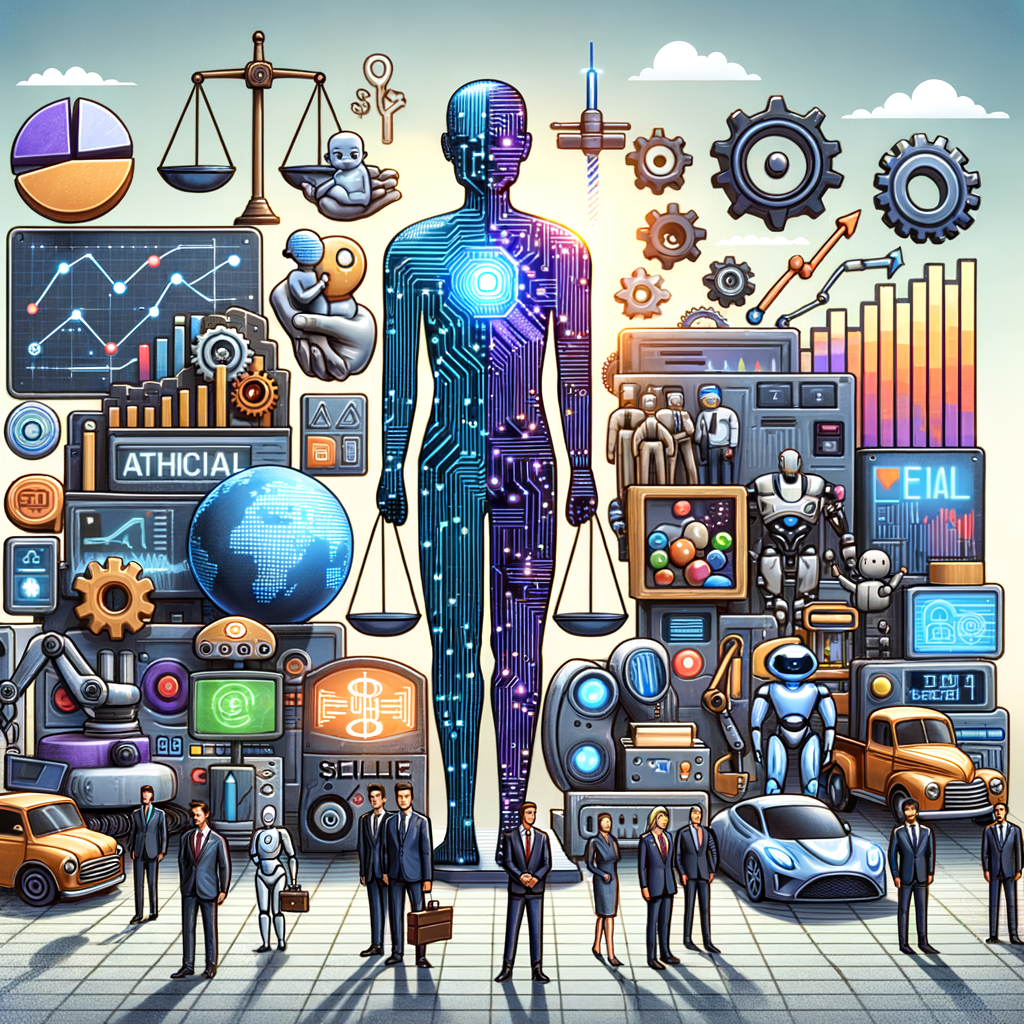
Illustration of a digital figure embodying artificial intelligence, surrounded by symbols of technology, business, and ethics, representing AI's role in enhancing productivity and innovation in small businesses.

Practical Examples of AI Applications for Small Businesses

Curious about artificial intelligence applications? Perhaps you’ve heard about AI’s transformative impact but aren’t sure how it applies to your business. Maybe you envision robots, not improved productivity and well-being. This article explores practical AI applications used today, demonstrating how this technology can benefit your company.

The global AI market is booming. Grand View Research values it at over $196 billion in 2024, projected to reach $1.8 trillion by 2030. McKinsey predicts an even larger $25.6 trillion AI impact on the global economy. These figures highlight the growing power of AI applications.

Real-World Examples of AI Applications

AI isn’t just a futuristic concept. It powers many tools you use daily. Let’s see how AI algorithms enhance several processes.

Boosting Productivity and Well-being in the Workplace

AI can enhance your work environment in numerous ways. Artificial intelligence applications aid in streamlining administrative tasks.

AI-powered scheduling software learns employee preferences and suggests meeting times. It can even re-route tasks based on real-time workload, improving team balance and efficiency. Personalized wellness platforms provide recommendations for stress management, fitness, and mindfulness.

  • Enhanced Scheduling and Task Management.
  • Personalized Wellness.

Transforming Customer Experiences

AI customer support transcends basic chatbots. It uses data science for real time problem solving and enhanced customer satisfaction.

AI analyzes customer behavior, browsing history, and purchases to provide personalized recommendations. This improves shopping experiences by suggesting relevant products.

AI-driven chatbots provide instant support 24/7. This frees human staff to handle complex issues. AI can also translate languages in real-time, enabling clear communication with international customers.

  • Personalized Recommendations.
  • 24/7 Support.

Revolutionizing Industries Through Examples of AI Applications

Beyond everyday tools, AI transforms entire industries. AI apps can be found in numerous fields. Here are a few examples of intelligence applications across industries. These examples show how AI enhances various business sectors.

IndustryAI ApplicationBenefit
HealthcareMedical Image AnalysisAids quicker, more accurate disease diagnostics through early detection.
FinanceFraud DetectionIdentifies and blocks unauthorized financial transactions through pattern recognition.
TransportationSelf-driving carsImproves road safety by minimizing human error, a factor in over 90% of accidents.
AgriculturePrecision FarmingOptimizes crop yields through sensor data analysis, minimizing waste and adapting to weather.
E-commerceRecommendation EnginesRecommends products to customers based on their past behavior and preferences, improving sales and customer experience.
Customer ServiceChatbotsProvides instant customer support, answers frequently asked questions, and resolves simple issues, improving customer satisfaction and freeing up human agents.
CybersecurityThreat DetectionAnalyzes network traffic to identify and prevent cyber threats in real time, enhancing security and protecting sensitive data.
EducationPersonalized learningAdapts to each student’s learning style and pace, providing customized educational content and feedback to improve learning outcomes. Uses adaptive learning platforms for delivering tailored lessons.

Ethical Considerations for Businesses Implementing AI

Businesses should use data responsibly, mitigate potential job displacement from automation, and address algorithm biases. Human resource departments need to understand how AI tools are used.

Thoughtful AI implementation requires a human-centric approach. AI tools should augment human capabilities, not replace them entirely.

FAQs about examples of ai applications

What is an AI application example?

An AI application uses artificial intelligence techniques. These range from digital assistants like Siri and Alexa to niche tools for personalized test preparation like Magoosh. Broader business implementations include expense reporting, fraud detection, and predictive modeling software. Examples span smart thermostats, sophisticated enterprise systems, and GenAI.

What are some applications of AI being used today?

AI aids various fields, from education with Wolfram Alpha to research with IBM Watson Discovery. Healthcare organizations like Woebot Health incorporate AI for psychological services.

What are examples of AI in real life?

Many unnoticed real-life AI examples exist. Mapping apps like Google Maps or Waze offer “search by photo” functionality. AI powers apps like FaceApp, Snapchat filters, and Lensa AI.

Social media uses substantial AI. Entertainment platforms like Spotify leverage AI to understand user tastes and offer personalized recommendations. Smart devices such as smartphones, smart speakers, and wearables also use various forms of AI, particularly virtual assistants. This creates a more seamless and integrated user experience.

What AI app is everyone using?

While several AI chatbots are popular, ChatGPT is currently notable in 2024. Many use the paid web version or access it through platforms like Bing’s free Copilot.

Conclusion: The Future of AI in Small Businesses

Artificial intelligence applications are integrated into our daily lives, at home and work. As AI advances, businesses have more opportunities to enhance well-being, productivity, and customer experiences.

Viewing AI as a supporting resource, not a human replacement, changes the dynamic. We can achieve more together. From improved communication and customer service to enhanced creative output, safety, and scientific discovery, thoughtful AI application fosters a brighter future.


Facebook
Twitter
LinkedIn
Related Post
Mini Case Study: Personalized AI Recommendations Boost E-Commerce Sales | eMediaAI

Mini Case Study: Personalized AI Recommendations
Boost E-Commerce Sales

Problem

Competing with giants like Amazon made it difficult for a small but growing e-commerce brand to deliver the kind of personalized shopping experience customers expect. Their existing recommendation engine produced generic suggestions that ignored customer intent, seasonality, and browsing behavior — resulting in low conversion rates and high cart abandonment.

Solution

The brand implemented a bespoke AI recommendation agent that delivered real-time personalization across their digital storefront and email campaigns.

  1. The AI analyzed browsing history, purchase patterns, session duration, abandoned carts, and delivery preferences.
  2. It then generated dynamic product suggestions optimized for cross-selling and upselling opportunities.
  3. Personalized recommendations extended to marketing emails, highlighting products relevant to each customer's unique shopping journey.
  4. The system continuously improved by learning from user engagement and conversion outcomes.

Key Capabilities: Real-time personalization • Behavioral analysis • Cross-sell optimization • Continuous learning from user engagement

Results

Average Cart Value

+35%

Increase driven by intelligent upselling and cross-selling.

Email Conversion

+60%

Lift in email conversion rates with personalized product highlights.

Cart Abandonment

Reduced

Significant reduction in cart abandonment, boosting total sales performance.

ROI Timeline

3 Months

The AI system paid for itself through improved revenue efficiency.

Strategy

In today's market, one-size-fits-all recommendations no longer work. Tailored AI systems designed around your customer data deliver the kind of personalized, dynamic experiences that drive loyalty and repeat purchases — helping niche e-commerce brands compete effectively against industry giants.

Why This Matters

  • Customer Expectations: Modern shoppers expect Amazon-level personalization regardless of brand size.
  • Competitive Edge: AI-powered recommendations level the playing field against larger competitors.
  • Data-Driven Insights: Continuous learning means the system gets smarter with every interaction.
  • Revenue Multiplication: Small improvements in conversion and cart value compound dramatically over time.
  • Customer Lifetime Value: Personalized experiences drive repeat purchases and brand loyalty.
Customer Story: AI-Powered Video Ad Production at Scale

Marketing Team Generates High-Quality
Video Ads in Hours, Not Weeks

AI-powered video production reduces campaign creation time by 95% using Google Veo

Customer Overview

Industry
Travel & Entertainment
Use Case
Generative AI Video Production
Campaign Type
Destination Marketing
Distribution
Digital & In-Flight

A marketing team responsible for promoting global travel destinations needed to produce a constant stream of fresh, high-quality video content for in-flight entertainment and digital advertising campaigns. With hundreds of destinations to showcase across multiple markets, traditional production methods couldn't keep pace with demand.

Challenge

Traditional production — involving creative agencies, travel shoots, and post-production — was costly, time-consuming, and logistically complex, often taking weeks to produce a single 30-second ad. This limited the team's ability to adapt campaigns quickly to market trends or seasonal travel spikes.

Key Challenges

  • Traditional video production required 3–4 weeks per 30-second ad
  • Physical location shoots created high costs and logistical complexity
  • Limited content volume constrained campaign variety and testing
  • Slow turnaround prevented rapid response to seasonal travel trends
  • Agency dependencies created bottlenecks and budget constraints
  • Maintaining brand consistency across dozens of destination videos

Solution

The marketing team implemented an AI-powered video production pipeline using Google's latest generative AI technologies:

Google Cloud Products Used

Google Veo
Vertex AI
Gemini for Workspace

Technical Architecture

→ Destination selection & campaign brief
→ Gemini for Workspace → Script generation
→ Style guides + reference imagery compiled
→ Google Veo → Cinematic video generation
→ Human review & approval
→ Deployment to digital & in-flight channels

Implementation Workflow

  1. The team selected a destination to promote (e.g., "Kyoto in Autumn").
  2. They used Gemini for Workspace to brainstorm and generate a compelling 30-second video script highlighting the city's cultural and visual appeal.
  3. The script, along with style guides and reference imagery, was fed into Veo, Google's generative video model.
  4. Veo produced a high-quality cinematic video clip that captured the desired tone and visuals — all in hours rather than weeks.
  5. The final assets were quickly reviewed, approved, and deployed across digital channels and in-flight entertainment systems.
Example Campaign: "Kyoto in Autumn"

Script generated by Gemini highlighting cultural landmarks, fall foliage, and traditional experiences. Veo created cinematic footage showing temples, cherry blossoms, and street scenes — all without a physical production crew.

Results & Business Impact

Time Efficiency

95%

Reduced ad production time from 3–4 weeks to under 1 day.

Cost Savings

80%

Eliminated physical shoots and editing labor, saving ≈ $50,000 annually for mid-size campaigns.

Creative Scalability

10x Output

Enabled production of dozens of destination videos per month with brand consistency.

Engagement Lift

+25%

Increased click-through rates on destination ads due to richer, faster content rotation.

Key Benefits

  • Rapid campaign iteration enables A/B testing and seasonal responsiveness
  • Dramatically lower production costs allow coverage of niche destinations
  • Consistent brand voice and visual quality across all generated content
  • Reduced dependency on external agencies and production crews
  • Faster time-to-market improves competitive positioning in travel marketing
  • Environmental benefits from eliminating unnecessary travel and location shoots

"Google Veo has fundamentally changed how we approach video content creation. We can now test dozens of creative concepts in the time it used to take to produce a single video. The quality is cinematic, the turnaround is lightning-fast, and our engagement metrics have never been better."

— Director of Digital Marketing, Travel & Entertainment Company

Looking Ahead

The marketing team plans to expand their AI-powered production capabilities to include:

  • Personalized destination videos tailored to customer preferences and travel history
  • Multi-language versions of campaigns generated automatically for global markets
  • Real-time content updates based on seasonal events and local festivals
  • Integration with customer data platforms for hyper-targeted advertising

By leveraging Google Cloud's generative AI capabilities, the organization has transformed video production from a bottleneck into a competitive advantage — enabling creative agility at scale.

Customer Story: Automated Podcast Creation from Live Sports Commentary

Sports Broadcaster Transforms Live Commentary
into Same-Day Highlight Podcasts

Automated podcast creation reduces production time by 93% using Google Cloud AI

Customer Overview

Industry
Sports Broadcasting & Media
Use Case
Content Automation
Size
Mid-sized Sports Network
Region
North America

A regional sports broadcaster manages hours of live event commentary daily across multiple sporting events. The organization needed to transform raw commentary into engaging, shareable content that could be distributed to fans immediately after events concluded.

Challenge

Creating highlight reels and post-event summaries manually was slow and resource-intensive, often taking an entire production team several hours per event. By the time the recap was ready, fan interest and social engagement had already peaked — leading to missed opportunities for timely content distribution and reduced viewer retention.

Key Challenges

  • Manual transcription and editing required 5+ hours per event
  • Delayed content release reduced fan engagement and social media reach
  • High production costs limited content output for smaller events
  • Inconsistent quality across multiple simultaneous events
  • Limited scalability during peak sports seasons

Solution

The broadcaster implemented an automated podcast creation pipeline using Google Cloud AI and serverless technologies:

Google Cloud Products Used

Cloud Storage
Speech-to-Text API
Vertex AI
Cloud Functions

Technical Architecture

→ Live commentary audio → Cloud Storage
→ Cloud Function trigger → Speech-to-Text
→ Time-stamped transcript generated
→ Vertex AI analyzes transcript for exciting moments
→ AI generates 30-second highlight scripts
→ Polished podcast ready for distribution

Implementation Workflow

  1. Live commentary audio was captured and stored in Cloud Storage.
  2. A Cloud Function triggered Speech-to-Text to generate a full, time-stamped transcript.
  3. The transcript was sent to a Vertex AI generative model with a prompt to detect the top 5 exciting moments using cues like keywords ("goal," "crash," "overtake"), exclamations, and sentiment.
  4. Vertex AI generated short 30-second highlight scripts for each key moment.
  5. These scripts were converted into audio using text-to-speech or recorded by a human host — producing a polished "daily highlights" podcast in minutes instead of hours.

Results & Business Impact

Time Savings

93%

Reduced highlight production from ~5 hours per event to 20 minutes.

Cost Reduction

70%

Automated workflows cut production costs, saving an estimated $30,000 annually.

Fan Engagement

+45%

Same-day release of highlight podcasts boosted daily listens and social media shares.

Scalability

Multi-Event

System scaled effortlessly across multiple sports events year-round.

Key Benefits

  • Same-day content delivery captures peak fan interest and engagement
  • Smaller production teams can maintain consistent output across multiple events
  • Automated quality and formatting ensures professional results at scale
  • Reduced time-to-market improves competitive positioning in sports media
  • Lower operational costs enable coverage of more sporting events

"Google Cloud's AI capabilities transformed our production workflow. What used to take our team an entire afternoon now happens automatically in minutes. We're able to deliver content while fans are still talking about the game, which has completely changed our engagement metrics."

— Head of Digital Content, Sports Broadcasting Network